



How Much Does It Cost to Render a House in the UK?
Rendering cost is one of the most searched — and most inconsistently answered — questions in exterior home improvement. The honest answer is that property type and size drive the price far more than most headline "cost per m²" figures suggest, because they determine scaffolding requirements, wall area, access difficulty and how many corners, bays and gables need detailing. This guide breaks rendering cost down by property type, so you can budget against a figure that actually applies to a house like yours, not a generic average.
As a general rule, rendering a UK property in 2026 costs somewhere between £4,000 for a small terraced property and £35,000+ for a large detached house, with render type, existing wall condition and access being the next biggest variables after size.
Rendering Cost by Property Type
These are realistic UK ranges for a full render — removing any existing failed render where necessary, and applying a new system — including scaffold. Actual price depends on your specific wall area, render type and access, all confirmed at survey.
| Property Type | Typical Wall Area | Full Render Cost |
|---|---|---|
| Mid-terrace (front only) | 30–45m² | £4,000–£7,000 |
| End-terrace / small semi | 60–90m² | £7,000–£12,000 |
| Semi-detached (full) | 90–130m² | £10,000–£16,000 |
| Bungalow | 80–120m² | £8,500–£14,000 |
| Medium detached | 150–200m² | £19,000–£26,000 |
| Large detached | 220m²+ | £26,000–£35,000+ |
Bungalows sit lower than their footprint might suggest because there's usually only one storey of wall to render and scaffold, even though the roof area and footprint can be larger than a small semi.
Terraced houses
Mid-terrace properties are the cheapest to render simply because only the front elevation is typically exposed and rendered — side and rear walls are shared with neighbouring properties or already covered. End-terrace houses cost more because one side elevation is exposed, effectively adding a second wall's worth of area and scaffold to the job.
Semi-detached houses
Semis usually need both the front and one side elevation rendered as a minimum, with many homeowners choosing to render the full property including the rear for a consistent finish. This is the property type where render vs coating decisions are most commonly weighed against each other, since the wall area is large enough that the cost difference between the two approaches becomes significant.
Detached houses
Detached properties have all four elevations exposed, which is the single biggest driver of the jump in price versus semis and terraces. Larger detached properties also tend to have more architectural detailing — bay windows, gables, dormers — each of which adds labour time independent of the raw wall area.
Rendering Cost for an Extension
Rendering a new extension is a slightly different job to rendering an existing property, and it's worth budgeting separately. New-build blockwork typically needs a specific curing period before render can go on — usually a minimum of a few weeks — and the render system needs to be compatible with the extension's insulation specification if it's built to current building regulations. Costs are broadly comparable per m² to rendering an existing wall, though a single-storey extension is often more cost-effective per m² than a full house because access is simpler and there's less scaffold complexity around existing features like bay windows or multiple storeys.
| Extension Size | Typical Wall Area | Render Cost |
|---|---|---|
| Small single-storey (e.g. kitchen extension) | 20–35m² | £3,000–£5,500 |
| Medium single-storey | 35–55m² | £5,500–£8,500 |
| Two-storey extension | 55–90m² | £8,500–£13,000 |
One point worth flagging: where an extension is rendered to match an existing rendered property, colour matching between old and new render is a common source of dissatisfaction — new render dries a different, often brighter shade than render that's weathered for several years. Discuss this with your contractor before work starts, since the whole property can sometimes need a fresh coat or coating to bring everything back to a consistent finish.
Does the Time of Year Affect Rendering Cost?
Render can technically be applied for most of the year in the UK, but timing does have a bearing on both cost and quality. Spring and early autumn are generally considered the ideal windows — mild, stable temperatures and lower rainfall probability than deep winter. Rendering during the busiest months (typically April to September) can mean a longer wait for contractor availability, which sometimes pushes prices up slightly due to demand, while booking in the quieter winter months can occasionally secure a better rate — provided the render system being used is rated for cold-weather application, since some traditional render systems have minimum temperature requirements for proper curing. A wall coating has more flexibility here, since it doesn't rely on the same multi-layer curing process as a full render build-up, and Pinnacle applies coatings year-round in almost any UK weather condition.
How Architectural Features Affect Cost
Two properties with an identical footprint and wall area can still have meaningfully different rendering costs depending on architectural detailing:
- Bay windows — each bay adds three extra corners and additional cutting-in around glazing compared with a flat wall, increasing labour time disproportionately to the small extra wall area
- Multiple gables and dormers — steep, angled sections need more careful scaffold access and detailing than a simple flat elevation
- Render below damp-proof course level — properties needing render to extend lower than standard, or requiring a bell-cast detail at the base, add extra material and labour
- Decorative detailing — quoins, string courses or textured banding around windows all add time versus a plain, uninterrupted render finish
These features are exactly why a fixed quote from an in-person survey is far more reliable than any online calculator or generic per-m² estimate — the shape of your walls matters as much as their total area.
What Affects Rendering Cost Beyond Property Size
Property type sets the baseline, but several other factors move the price within — and sometimes beyond — the ranges above.
Render system chosen
Traditional sand and cement render is generally the cheapest material, while silicone and polymer-modified renders cost more per m² but last longer and resist cracking better. See the render type comparison below.
Existing wall condition
If the current render or pebbledash needs removing first, that adds a separate cost before any new render goes on — typically £2,000–£9,000 depending on property size, as covered in detail in our pebbledash removal cost guide. Cracked or damp substrate may also need repair before rendering can proceed.
Access and scaffolding complexity
Terraced houses with rear access issues, properties on a slope, or homes close to a boundary wall or neighbouring property can all add scaffold cost. Bay windows, dormers and multiple gables also increase labour time significantly versus a flat, simple elevation.
Number of storeys
Each additional storey doesn't just add wall area — it adds scaffold height, which increases both material and labour cost per m² compared with single-storey work.
Choice of contractor and approval status
Contractors approved to apply a specific render or coating system (such as Wethertex-approved status) sometimes quote slightly higher than an unapproved local tradesperson, but that difference typically reflects a manufacturer-backed guarantee, formal training, and accountability that an unapproved installer can't offer. Given render failure is so often a workmanship issue rather than a material one (see our render falling off guide), this is one area where the cheapest quote can end up costing considerably more over a 10–15 year horizon once repair or premature replacement is factored in.
Rendering vs Cladding — A Brief Cost Comparison
Cladding is sometimes considered as an alternative to render, particularly for extensions or full exterior refurbishments. Timber, composite and uPVC cladding systems typically cost £80–£150+ per m² installed — generally higher than render or coating on a like-for-like basis, and timber cladding specifically carries its own ongoing maintenance burden (staining or treating every few years) that render and coatings don't. Cladding does offer a different aesthetic that some homeowners specifically want, and can be a practical choice where the existing wall isn't suitable for render at all. For most standard brick or block properties looking to modernise or protect the exterior, however, render or a wall coating remains the more cost-effective route.
Render Type Cost Comparison
| Render Type | Cost per m² (material + labour) | Best Suited To |
|---|---|---|
| Sand & cement | £40–£60 | Solid masonry walls, budget projects |
| Monocouche (one-coat) | £55–£75 | New-build and standard block/brick walls |
| Polymer-modified | £60–£85 | Properties needing better crack resistance |
| Silicone render | £70–£100 | Long-term durability, self-cleaning finish |
For a deeper breakdown of silicone specifically, see our silicone render cost guide.
Rendering Listed Buildings and Older Properties
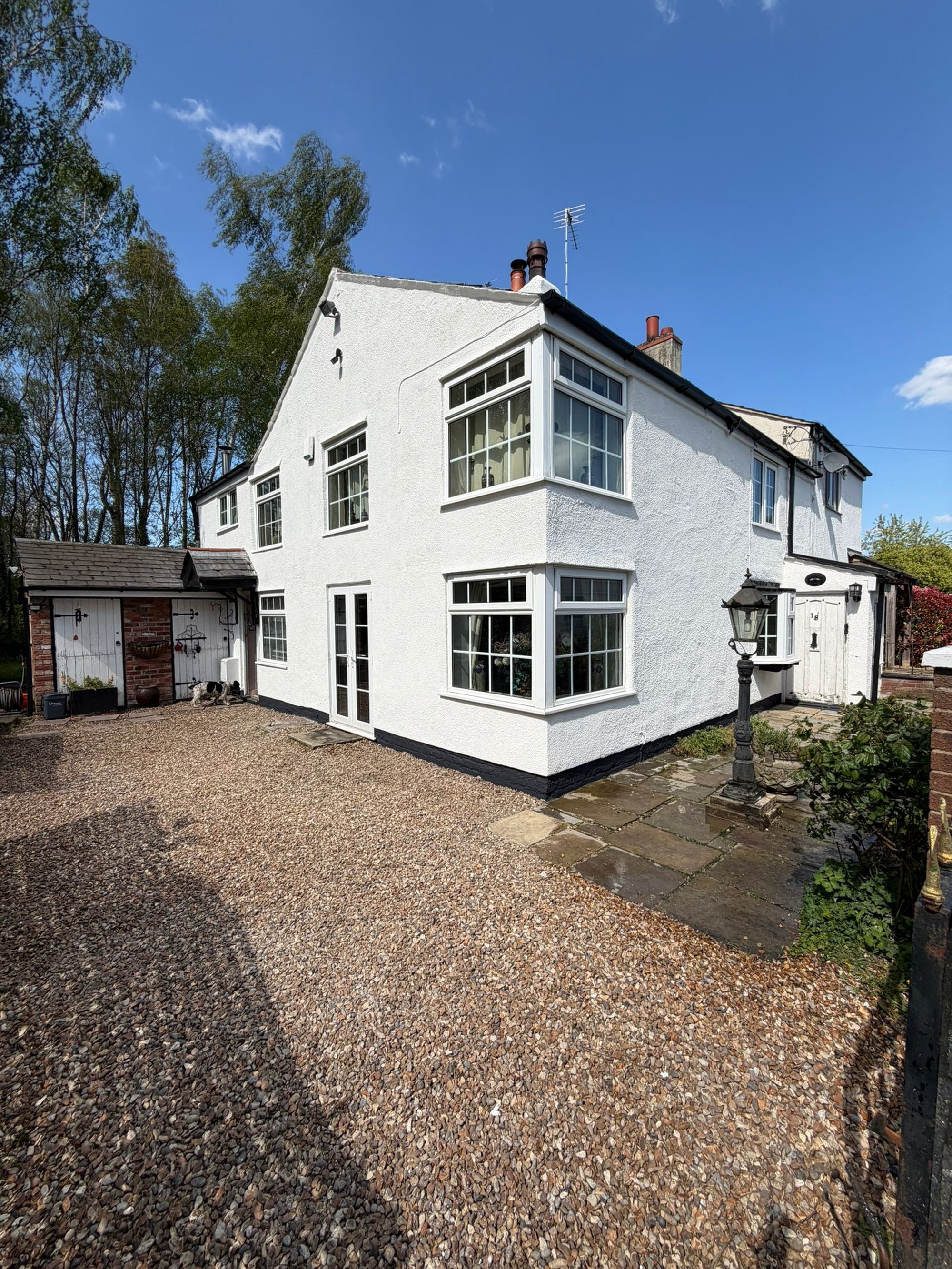
Properties with listed status or in conservation areas often face additional cost considerations beyond the standard ranges above. Traditional lime render — frequently required on older solid-wall properties instead of modern cement-based systems — is more labour-intensive to apply and typically costs 20–40% more than standard render per m², reflecting both the specialist skill required and the slower application and curing process lime demands. Formal consent may also be needed before any render work begins, which can add time to the project timeline even before work starts. If your property falls into this category, it's worth building in both the cost premium and the additional lead time when budgeting, and specifically seeking a contractor experienced with heritage and listed-building work rather than standard modern render application.
Rendering Cost and Mortgage Valuations
Failing or visibly deteriorating render can sometimes be flagged during a mortgage valuation or survey, particularly where it's linked to visible damp evidence or structural concerns. Where this happens, a lender may request the issue is resolved as a condition of the mortgage, or hold back a retention until remedial work is completed and evidenced. This is worth factoring into timing if you're planning to sell or remortgage a property with render in poor condition — addressing it proactively, whether through a full re-render or a lower-cost wall coating, avoids this becoming a hold-up during a transaction, and a fresh, guaranteed exterior finish is also a straightforward, visible improvement for valuation purposes.
Hidden Costs That Get Left Off Headline Quotes
Several costs are easy for a quote to leave out or bury in small print. Worth checking for explicitly before comparing prices:
- Scaffold hire and erection — sometimes quoted separately, and can be 20–30% of the total job cost
- Removal and disposal of old render — skip hire and labour for stripping back existing failed render
- Substrate repair — repointing, crack repair or replacing damaged brickwork before render can go on
- Beading and detailing — corner beads, movement joints and detailing around windows and doors
- Painting or colour coat — some render systems are self-coloured, others need a separate masonry paint finish, which is an ongoing cost every few years
- VAT — always confirm whether quoted prices are inclusive
A quote that's significantly cheaper than the ranges above is worth double-checking against this list — it's common for one or more of these to be missing rather than genuinely included at a lower price.
Rendering vs the Lower-Cost, Longer-Guaranteed Alternative
For many properties — particularly where the existing render or masonry is fundamentally sound and just needs a protective, waterproof finish rather than full replacement — a wall coating achieves a comparable transformation at a lower cost and with a longer guarantee than a full re-render.
See the full breakdown in our wall coating vs rendering comparison.
How a Wall Coating Job Runs, Start to Finish
Free Survey
Wall condition assessed and a fixed all-in price confirmed
Scaffold & Prep
Property protected, surface cleaned and repaired where needed
Prime & Coat
Specialist primer, then the coating applied in your chosen colour
20-Year Guarantee
Issued once you're fully satisfied with the finished result
Can You Render a House Yourself?
Technically yes, and it's a common way people try to bring costs down — but it's worth going in with realistic expectations. Rendering is a skilled trade: getting a flat, even finish across a full elevation, managing drying times correctly in UK weather, and detailing correctly around windows, corners and movement joints all take practical experience that's hard to build on a first attempt. A poorly applied DIY render is also one of the most common causes of the bond failure and cracking covered in our render falling off guide — meaning a DIY job that goes wrong can end up costing more to put right than a professional job would have cost in the first place. Most manufacturer guarantees on render systems also only apply when installed by an approved contractor, so a DIY render typically carries no meaningful guarantee at all.
How to Get an Accurate Quote for Your Property
- Get at least three quotes, and make sure each one specifies the exact render or coating system by name
- Ask whether scaffold, removal of old render, and VAT are included in the headline figure
- Ask what guarantee is offered, and whether it's insurance-backed or contractor-backed
- Check the contractor is approved to apply the specific system they're quoting for — not just experienced with render generally
- Compare like-for-like: a sand and cement quote and a silicone render quote for the same wall are not directly comparable
Related Guides
Frequently Asked Questions
A typical 3-bed semi-detached house costs £10,000–£16,000 to fully render, depending on the render system chosen, wall condition and access. This includes scaffold and labour. Rendering only the front elevation rather than the full property will bring this down, though most contractors and mortgage valuers recommend a consistent finish across all elevations.
Detached houses have render exposed on all four elevations rather than sharing walls with neighbouring properties, which roughly doubles or triples the wall area compared with a terraced or semi-detached property of similar internal size. Full scaffold is also needed around the entire building rather than just the front and rear, which significantly increases both material and labour cost.
Generally yes, even where the footprint is similar or larger, because a bungalow only needs single-storey scaffold and has less total wall area exposed compared with a two-storey house of equivalent floor space. Typical bungalow rendering costs £8,500–£14,000, versus £10,000–£16,000+ for a similarly sized two-storey semi.
Sand and cement render is the cheapest material option per m², but it has the shortest lifespan and is most prone to cracking, meaning ongoing maintenance costs over time. Where the existing wall is fundamentally sound, a wall coating applied over it is often the lowest genuine lifetime cost, since it avoids the expense of full render removal and comes with a 20-year guarantee rather than needing repainting or repair every few years.
It should, but always confirm explicitly — some quotes list scaffold as a separate line item, which can add 20–30% to what initially looks like a competitive headline price. All Pinnacle quotes are fixed, all-inclusive prices covering scaffold, preparation, primer, coating and the 20-year guarantee, confirmed at your free survey.
A full re-render typically takes 1–3 weeks depending on property size, weather and whether old render needs removing first. A wall coating applied over sound existing render is usually faster — most properties are completed in 3–7 days since there's no full render system to build up in layers.
Yes — Pinnacle covers all of England and Wales for free surveys and quotes. Use our suitability checker or call us free on 0333 772 3623 to confirm coverage for your postcode.
Get a Fixed Price for Your Exact Property
Our free suitability checker takes less than 60 seconds. Book a free survey — our surveyor will measure your walls, confirm the right approach, and give you a fixed all-in price. Covering all of England and Wales. No obligation to proceed.