



The Short Answer — What Does Rendering Cost?
For most UK homes, rendering costs between £7,500 and £30,000 depending on property size, the type of render chosen, and whether existing render needs removing first. A mid-terraced or semi-detached property typically sits in the £7,500–£12,000 range for silicone render. A large detached home can comfortably exceed £25,000 once all costs are included.
The important caveat — which we'll cover in detail — is that the figure you're quoted upfront frequently does not include scaffolding, hack-off of existing render, or decoration after the render is applied. These three additions alone can add £4,000–£8,000 to the headline price. Understanding the full cost before you commit is essential.
Rendering Costs by Property Type (2026)
The single biggest factor affecting rendering cost is the size of your property — specifically the total surface area of external walls and the number of elevations that need treating. The following ranges are for silicone render, which is the most commonly specified option for UK residential properties in 2026, including scaffolding but excluding hack-off of existing render where required.
| Property Type | Silicone Render Cost | Add for Hack-Off | Full Realistic Cost |
|---|---|---|---|
| 1 wall only | £4,500 – £7,500 | £500 – £1,500 | £5,000 – £9,000 |
| Mid terrace / semi-detached / bungalow | £7,500 – £12,000 | £1,000 – £2,500 | £8,500 – £14,500 |
| Small detached | £12,000 – £18,000 | £1,500 – £3,000 | £13,500 – £21,000 |
| Medium detached (3/4 walls) | £17,000 – £22,000 | £2,000 – £4,000 | £19,000 – £26,000 |
| Large detached (4 walls+) | £22,000 – £30,000+ | £2,500 – £5,000+ | £24,500 – £35,000+ |
Before you accept any rendering quote: always confirm specifically whether scaffolding, hack-off of existing render, and decoration are included in the figure you've been given. These are routinely excluded from headline quotes and discovering the real cost after you've agreed can be a very unpleasant surprise.
Rendering Costs by Type of Render
The type of render specified is the second major cost driver. There is a significant price range across render types, and the cheapest option is not necessarily the best long-term value. Here's an honest breakdown of the main options used on UK residential properties:
Cement Render Budget option
The traditional and least expensive render type. Sand and cement mixed on-site. Inflexible — prone to cracking as the building moves. Requires painting and regular maintenance. Still widely used but rarely the best choice for longevity.
Silicone Render Most popular
The most commonly specified render on UK homes today. Flexible, breathable, water-repellent and available in a wide colour range. Manufacturer-formulated rather than mixed on-site. Higher upfront cost but considerably better longevity and lower maintenance than cement render.
Monocouche / K-Rend Through-colour
A single-coat polymer-modified render that comes through-coloured — no painting required. Gives a clean, contemporary finish. Similar cost to silicone render, sometimes slightly higher. Popular on new builds and modern refurbishments.
Spray Render Application method
Machine-applied rather than hand-applied render. Faster on large properties. The render material itself is usually silicone or monocouche — the spray element refers to how it's applied, not what it's made of. Cost is similar to hand-applied equivalents; the main advantage is application speed on large jobs.
Wondering about the difference between silicone render and a wall coating? See our detailed comparison: Wall Coating vs Rendering — The Honest Comparison →
The Hidden Costs Most Rendering Quotes Leave Out
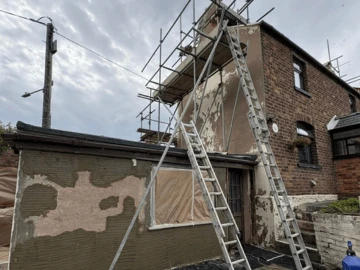
This is the section most homeowners wish they'd read before agreeing a rendering quote. The headline price from a rendering contractor frequently excludes several substantial costs that are inevitable parts of any rendering project. Understanding these before you compare quotes is essential.
Hidden Rendering Costs to Ask About Upfront
Added together, these excluded items can realistically add £4,000–£12,000 to the headline rendering price. A quote that looks competitive at £10,000 may actually be a £16,000+ project once everything is included.
When requesting rendering quotes, ask each contractor specifically: "Does this price include scaffolding, hack-off if needed, all substrate repairs, decoration and waste removal?" Get the answer in writing before comparing figures.
What Else Affects Rendering Cost?
Beyond property size and render type, several other factors can push your rendering cost up or down significantly. Understanding these helps you anticipate variations between quotes and assess whether a low quote is genuinely good value or simply excluding items others have included.
Access and height
The higher your property, the more complex and costly the scaffold requirement. A standard two-storey detached home has a relatively straightforward scaffold need. Properties with complex rooflines, extensions at different heights, steep plots or restricted access for scaffold trucks cost more. Some contractors will use mobile access platforms for single-storey work, reducing scaffold costs.
Condition of existing substrate
The worse the condition of your current exterior, the more preparation work is needed before rendering can begin. Failed render, hollow areas, significant cracking and water damage all add time and cost. A thorough survey before quoting should identify these issues — a quote that doesn't involve inspecting the substrate is a quote that will likely change once work begins.
Property location
Rendering costs in London and the South East are typically 15–25% higher than equivalent work in the North of England or Midlands, reflecting local labour rates. Coastal properties may require specialist materials or additional coats due to salt exposure. Scaffolding costs vary considerably by region.
Number of elevations
A mid-terrace property has only two external walls to treat — front and rear. A detached property has four, plus any returns or extensions. The difference in surface area between a terrace and a similar-sized detached home can be significant, and pricing should reflect this accurately.
Colour and finish specification
Standard render colours from the manufacturer's core range are priced into most quotes. Bespoke or RAL colours, textured finishes, or multiple colours on the same property typically attract a premium.
How Long Does Rendering Last?
The longevity of rendering depends heavily on the type specified, the quality of application, and the local climate conditions your property faces. Here's an honest assessment of what to expect from each render type in typical UK conditions.
Cement render is the most problematic for longevity. Its rigidity means it cracks as the building moves with seasonal temperature changes. Most cement-rendered properties show cracking within 5–10 years and need significant attention within 15. Regular repainting is required to maintain appearance and some protection, adding ongoing cost.
Silicone and monocouche renders perform considerably better. When applied correctly by a qualified contractor to a sound, properly prepared substrate, a silicone render can last 20–25 years without major intervention. However, the contractor guarantee is typically 10 years — meaning you have formal recourse for a decade, then you're relying on the quality of the application for the remaining lifespan.
It's worth asking any rendering contractor specifically:
Before You Book Rendering — Read This
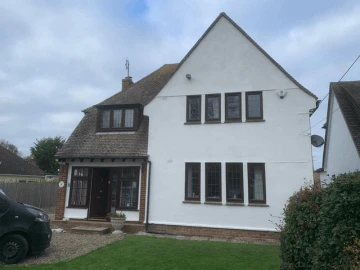
If you've read this far, you now have a clear picture of what rendering actually costs and what to look out for in quotes. Before you commit, it's worth understanding that there is an alternative that a significant proportion of UK homeowners choose once they've seen a comparison — particularly those who've had rendering quotes and been surprised by the cost.
An exterior wall coating is a resin-based system applied over your existing exterior surface. Unlike rendering, it doesn't require removal of what's already there in most cases. It's spray-applied after thorough preparation, creates a fully waterproof and breathable surface, and comes with a 20-year no-quibble guarantee on every job — double the typical rendering contractor guarantee.
The cost comparison is significant. Using our pricing for context:
| Property Type | Rendering (all-in realistic cost) | Pinnacle Wall Coating | Saving |
|---|---|---|---|
| 1 wall only | £5,000 – £9,000 | £3,500 – £5,000 | Up to £4,000 |
| Semi-detached / bungalow | £8,500 – £14,500 | £5,000 – £8,000 | Up to £6,500 |
| Small detached | £13,500 – £21,000 | £8,000 – £12,000 | Up to £9,000 |
| Medium detached | £19,000 – £26,000 | £12,000 – £15,000 | Up to £11,000 |
| Large detached | £24,500 – £35,000+ | £15,000+ | Significant |
The wall coating prices above are all-inclusive fixed prices — scaffolding, preparation, crack repairs, primer, coating and the 20-year guarantee are all included. There are no additions after the quote is agreed. See our full wall coating vs rendering comparison for a detailed breakdown of how the two options compare across all factors.
Our 20-year guarantee is twice the length of a typical rendering contractor guarantee — and it covers coating performance, waterproofing and adhesion in writing on every job. If anything covered by the guarantee fails, we return and fix it at no cost. No quibble.
What If You Have Pebbledash?
Pebbledash adds a layer of complexity to rendering decisions. Many homeowners with pebbledash are quoted for removal before rendering — a process that adds significantly to both cost and disruption. Pebbledash removal itself typically costs £2,000–£6,000 before rendering begins, pushing the total project cost well into the higher ranges in the tables above.
What's often not explained is that in the majority of cases, pebbledash removal is unnecessary. A wall coating applied directly over intact pebbledash delivers the same waterproof, transformed exterior without any removal, at a substantially lower total cost. See our our pebbledash options guide (coming soon) for a detailed comparison of all your choices.
What If Your Render Is Cracked?
Cracked render is one of the most common reasons homeowners start looking at either re-rendering or an alternative. The key question is whether the cracking is superficial or structural.
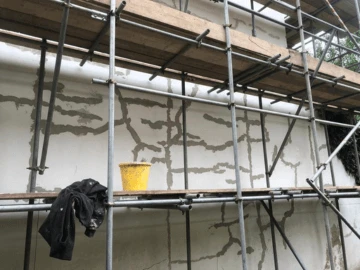
Superficial cracking — hairline cracks caused by thermal movement — is addressed as part of our preparation process at no additional cost. The flexible coating applied over repaired cracks prevents the same cracking recurring. For rendering, crack repair before application is usually an additional cost on top of the headline render price.
Significant structural cracking where render is delaminating from the wall face may require more substantial remedial work before any solution — coating or rendering — can be applied. Our surveyor assesses this at the free survey and advises honestly on what's needed. For full detail on cracked render options, see our cracked render guide.
How to Get Rendering Quotes You Can Actually Compare
Getting like-for-like rendering quotes is harder than it should be because most contractors specify their quotes differently. Follow this process to ensure you're comparing properly:
- Specify the render type — ask each contractor to quote for the same material (e.g. silicone render, 2-coat system, specific colour). If one quotes for cement and another for silicone, you cannot compare the prices.
- Confirm scaffolding is included — ask specifically whether the scaffold erection, hire and dismantling is in the quoted price. If not, ask for a separate scaffold cost.
- Ask about hack-off — does your existing render need removing? If so, what does that add and is it in the quote?
- Ask about substrate repairs — once the existing render comes off, additional wall repairs often emerge. How are these priced — included or extra?
- Confirm the guarantee terms — length, what it covers, Get the terms in writing.
- Ask who does the work — will the company's own employees be on your property, or subcontractors? This affects quality control and accountability.
- Understand payment terms — a reputable contractor should not require substantial payment upfront. Stage payments tied to completion milestones are reasonable.
The 20-Year Cost of Rendering vs Wall Coating
Looking at upfront cost alone can be misleading for a decision that affects your home for two decades. Consider the 20-year picture for a medium detached property:
| Option | Upfront Cost | 20-Year Maintenance | Total 20-Year Cost |
|---|---|---|---|
| Cement render + repaint every 5 years | £8,000 – £14,000 | £6,000 – £10,000 (4 repaints) | £14,000 – £24,000 |
| Silicone render (one application) | £17,000 – £26,000 | Minimal — occasional clean | £17,000 – £26,000 |
| Pinnacle wall coating | £12,000 – £15,000 | None — 20yr guarantee | £12,000 – £15,000 |
On a 20-year view, the wall coating consistently delivers the lowest total cost of ownership for most medium and large detached properties — and it's the only option that comes with a no-quibble guarantee for the entire 20-year period.
Frequently Asked Questions
Silicone render typically costs £40–£80 per square metre for supply and application, excluding scaffolding and hack-off. However, per-square-metre pricing can be misleading for homeowners because scaffold, mobilisation and setup costs don't scale linearly with area — a small job can cost proportionately more per m² than a large one. Total job price is a more useful comparison than per-m² rate.
Rendering a typical semi-detached or detached property takes 1–3 weeks from start to finish, including scaffold erection, hack-off if needed, surface preparation, render application and curing time. Large properties or those requiring extensive substrate repair can take 3–4 weeks. Scaffold is required for the entire duration.
Not always — but often. If the existing render is firmly adhered and in reasonable condition, it's sometimes possible to render over it. However, if it's delaminating, hollow, cracked extensively or damp-affected, it needs removing first. A surveyor should assess this before quoting. If hack-off isn't in the initial quote, clarify whether it might be needed once work begins.
Yes — an exterior wall coating is typically 30–50% cheaper than like-for-like rendering on an all-in basis, and comes with a longer guarantee. It's applied over your existing exterior surface without the need for removal, takes 3–5 days on scaffold rather than 2–4 weeks, and carries a 20-year no-quibble guarantee. See our full comparison guide for details.
Most rendering contractors offer a 10-year guarantee. By contrast, Pinnacle's 20-year wall coating guarantee is backed by our Wethertex-approved contractor status.
It's possible if the pebbledash is firmly adhered, but there are risks — the render bond is only as good as the pebbledash beneath it. Many contractors recommend removal before rendering for this reason, adding significantly to cost. A wall coating applied directly over intact pebbledash is an alternative that avoids removal costs entirely. See our our pebbledash options guide (coming soon).
A well-executed exterior treatment — whether rendering or wall coating — can add measurable kerb appeal and, in some markets, a small uplift in property value. Estate agents commonly cite a smart exterior as positively influencing buyer perception. The more important consideration is protecting the structural integrity of your walls from water ingress, which has a far more significant long-term effect on property condition and value than aesthetics alone.
Get at least three quotes and ask each contractor:
Masonry paint is the cheapest upfront option but requires repainting every 3–5 years and offers minimal waterproofing. Over 20 years, the cumulative repainting cost typically exceeds a one-time wall coating investment. For a genuinely long-term solution, a wall coating at £5,000–£15,000 depending on property size — with a 20-year guarantee — represents better value over any meaningful time horizon than repeated painting. See our wall coating vs masonry paint comparison.
Use our suitability checker — it takes less than 60 seconds and confirms whether your property qualifies. We then arrange a free no-obligation survey at a time that suits you. Our surveyor visits, assesses your exterior thoroughly, and gives you a fixed all-inclusive price covering scaffolding, preparation, coating and the 20-year guarantee. There is no pressure to proceed and no obligation at any stage.
Want an All-Inclusive Fixed Price for Your Property?
Our free suitability checker takes less than 60 seconds. Find out whether your property qualifies, then book a free survey — one price covering everything, with a 20-year guarantee and no obligation to proceed.