



Why Is Render Falling Off Your House?
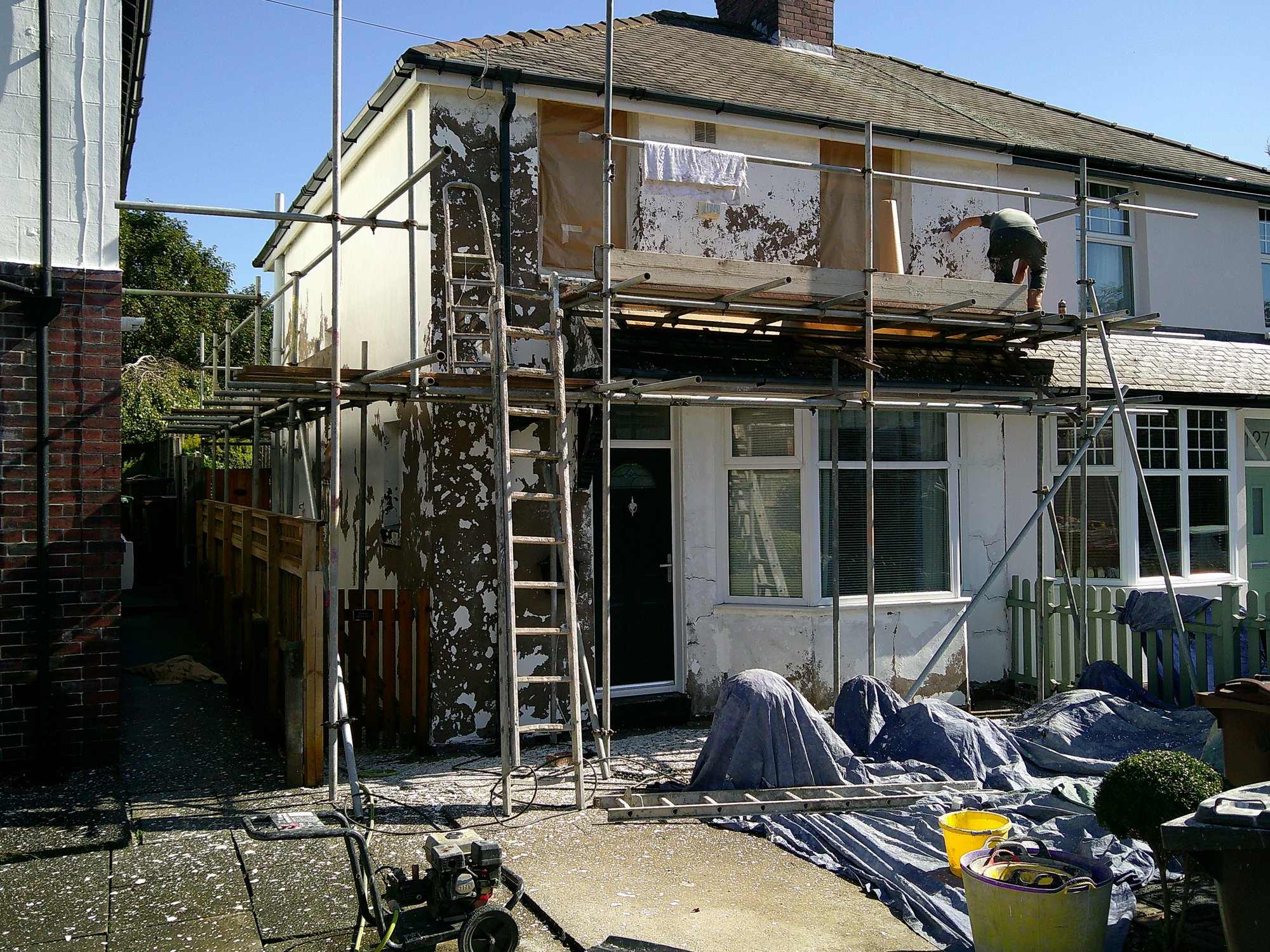
Render falling off — whether that's small pieces cracking away from a windowsill or entire sections dropping off in sheets after a storm — is one of the most common calls we get from homeowners across England and Wales. It's also one of the most misunderstood problems in exterior maintenance, because render can fail for several genuinely different reasons, and the fix that's right for one cause can be the wrong fix — or a waste of money — for another.
In almost every case, render doesn't fail because render itself is a poor material. It fails because of how or where it was applied: the wrong render system for the wall underneath, a rushed or skipped preparation stage, water getting in behind it, or simply old age catching up with a render that was never designed to last as long as it has. This guide walks through the real causes, how to tell which one applies to your property, and the honest options for fixing it — including why a growing number of homeowners are choosing a wall coating over a full re-render.
The Real Causes of Render Falling Off
Render is a system, not a single product — a bonding layer, a base coat (sometimes with reinforcing mesh), and a top coat, all needing to work together and to suit the wall underneath. When render fails, it's almost always because one part of that system broke down. Here are the four causes we see most often on surveys.
1. Bond failure between the render and the substrate
This is the single most common cause of render falling away in sheets rather than just cracking. Render needs a "key" — a mechanical or chemical bond — to grip the wall underneath. If the wall wasn't properly prepared before the render went on (dust, old paint, or a smooth surface with nothing for the render to grip), or if a bonding agent or scratch coat was skipped to save time, the render effectively sits on top of the wall rather than bonding to it. It can look perfectly fine for years and then let go all at once, usually after a period of wet weather that gets behind it and breaks the remaining bond.
2. The wrong render system for the substrate
Different walls need different render systems. A solid Victorian brick wall behaves completely differently to a 1960s block-built cavity wall, a timber-framed extension, or an insulated render (EWI) system. A rigid, cement-rich render applied to a wall that naturally moves — timber frame, or a wall with thermal movement — will crack because it can't flex with the substrate. Equally, a modern flexible render applied over an old, crumbling lime-based render without proper preparation is likely to fail because the layer underneath it is unstable.
3. Water getting in behind the render
Even well-applied render can fail if water finds a way in from somewhere else — a leaking gutter, a cracked window sill, a poorly sealed pipe penetration, or rising damp at the base of the wall. Water trapped behind render has nowhere to go, especially with denser cement-based renders that aren't very breathable. Repeated wetting and drying, and freeze-thaw cycling in winter, gradually pushes the render away from the wall from the inside out — which is why render sometimes fails first around windows, door frames and at the base of walls, exactly where water ingress is most common.
4. Age and natural end of lifespan
All render systems have a realistic lifespan, and it's shorter than most homeowners assume. Traditional sand and cement render typically lasts 15–25 years before it needs attention. Modern polymer-modified and silicone renders are usually rated for 20–30 years. Even a render that was applied well and hasn't suffered any water damage will eventually become brittle, lose flexibility and start to crack and drop away simply through age, UV exposure and thermal cycling — tens of thousands of expansion-and-contraction cycles over the decades.
Does the Type of Render Affect How It Fails?
Yes — significantly. The render system used on your property has a direct bearing on both why it's failing and what the right fix looks like, so it's worth knowing roughly what you're dealing with.
| Render Type | Typical Lifespan | Common Failure Mode |
|---|---|---|
| Traditional sand & cement | 15–25 years | Cracking from lack of flexibility; bond failure if applied to a poorly prepared wall |
| Pebbledash (thrown-stone finish) | 20–40 years | Individual pebbles or whole sections delaminating, especially on exposed elevations |
| Monocouche (one-coat render) | 15–20 years | Surface crazing and hairline cracking; more prone to bond issues if the wall wasn't primed correctly |
| Polymer-modified render | 20–25 years | Generally more flexible and crack-resistant; failure usually points to a substrate or water issue |
| Silicone render | 25–30 years | Longest-lasting of the common systems; failure at this level is almost always a substrate or application issue, not the render itself |
If your property has pebbledash specifically, the failure pattern and the fix are slightly different from smooth render — see our dedicated pebbledash coating guide for options that apply directly to that finish.
How UK Weather Affects Render Lifespan
Render doesn't fail in a vacuum — the specific climate a property sits in has a measurable effect on how long any given render system actually lasts versus its rated lifespan on paper.
Coastal and exposed properties
Salt-laden air and wind-driven rain are two of the harshest conditions render can face. Coastal properties in the South West, Wales, and exposed stretches of the North West and East coasts typically see render lifespans at the shorter end of the expected range, and are more prone to the water-ingress failure mode covered above, simply because rain is being driven horizontally into the wall rather than falling vertically and running off.
Freeze-thaw cycling
In colder parts of the UK — the Midlands, the North, and higher-altitude areas of Wales — repeated freezing and thawing of moisture trapped in or behind render is a major contributor to cracking. Water expands roughly 9% in volume as it freezes; trapped inside a hairline crack or behind a render layer, that expansion physically forces the crack wider each winter, which is why render failure is often first noticed in spring after a hard winter.
UV exposure and orientation
South and west-facing elevations get the most direct sun and UV exposure over a render's lifetime, which gradually breaks down the flexibility of the render's binder — the component that allows it to move slightly with the wall rather than cracking. This is a slower, more gradual failure mode than bond failure or water ingress, and tends to show up as fine, even crazing across a whole elevation rather than isolated cracking.
Does Home Insurance Cover Render Failure?
Generally, no — standard buildings insurance covers sudden, unforeseen damage (a storm ripping render away, for example) but not gradual deterioration from age, wear or a workmanship issue from the original installation. If render has failed due to age or a bond issue that developed over years, that's treated as a maintenance matter rather than an insurable event. Where render damage follows directly from a specific insured event — a burst pipe causing water damage that then affects the render, for instance — it's worth checking your policy, since the render repair may be covered as part of that claim even though general wear wouldn't be.
If your render was installed by a Wethertex-approved contractor under a manufacturer-backed guarantee, that's separate from insurance and worth checking first — it may cover failure within the guarantee period regardless of cause, which is one of the reasons we recommend confirming exactly what any guarantee actually covers before choosing a contractor.
Is Render Falling Off Dangerous? Should I Be Worried?
In most cases, render falling off is a maintenance and weatherproofing problem rather than a structural one — the render is a protective coating on top of the wall, not part of its structural strength. That said, it shouldn't be ignored:
- Loose render sections can become a falling hazard, particularly at height or near doorways and paths
- Once render has failed, the wall underneath is exposed to direct weathering, which accelerates further damage
- Water ingress that caused the render to fail is often still active, and can lead to internal damp, mould and — in older solid-wall properties — more serious masonry decay over time
- What starts as a small area of failed render at £300–£1,200 to patch typically spreads. Left for a few years, the same wall can need £5,000+ of remedial work
If render has fallen away and you can see damp, staining or damage to brickwork or blockwork underneath, treat it as more urgent — that section of wall has likely been exposed to the weather for some time.
How to Tell What's Actually Wrong With Your Render
Before paying for any repair, it's worth understanding which of the four causes above applies to your property — because a like-for-like patch repair on a bond failure will usually fail again in the same spot. A few things worth checking, or asking a surveyor to check for you:
- Tap test: gently tap the render across different areas. A hollow, drum-like sound indicates the render has debonded from the wall even where it hasn't visibly cracked yet
- Location of the failure: cracking concentrated around windows, door frames, pipes or at the base of the wall points strongly to water ingress rather than a general age or bond issue
- Pattern of the cracking: fine, even hairline cracking across a wide area is usually age and natural movement; large sheets coming away cleanly is usually bond failure; cracking that follows a straight line is often movement at a structural joint rather than a render problem at all
- Age of the render: if you know roughly when the property was last rendered, compare it against the lifespans above — render failing well within its expected life is more likely to be a workmanship or substrate issue than simple age
A proper survey — rather than a quick look from the pavement — is the only reliable way to tell the difference, because more than one cause is often present on the same wall. At Pinnacle, every free survey includes a full tap test across all elevations to identify exactly what's happening before we recommend anything.
Your Options for Fixing Render Falling Off
Once you know why the render has failed, there are three broad routes homeowners take. Each has a genuinely different cost and a different level of permanence.
For a full property-size breakdown of patch repair and re-render pricing, see our dedicated cracked render repair cost guide and rendering cost guide.
What It Costs by Property Size
The right fix, and its cost, depends heavily on how much of the wall is actually affected and the size of the property. As a general guide, based on jobs we've priced across England and Wales:
| Property Size | Isolated Patch Repair | Repair + Wall Coating | Full Re-Render |
|---|---|---|---|
| Single wall / small area | £300–£1,200 | £3,500–£5,000 | £5,000–£9,000 |
| Semi-detached | £800–£2,500 | £5,000–£8,000 | £10,000–£16,000 |
| Medium detached | £1,500–£4,000 | £12,000–£15,000 | £19,000–£26,000 |
| Large detached | £2,500–£6,000+ | £15,000–£22,000 | £26,000–£35,000+ |
These are indicative ranges rather than a quote — the exact price depends on access, scaffolding requirements and the extent of the failure, all of which are confirmed at a free survey. Note that patch repair costs shown are per instance — where render has failed in more than one area, or is likely to fail again elsewhere, those costs are often repeated over time rather than being a one-off.
Preventing Render Failure From Happening Again
Whichever fix you choose, a few maintenance basics make a real difference to how long it lasts:
- Keep gutters clear and check them at least once a year — overflowing gutters are one of the most common sources of water getting in behind render
- Re-seal around window and door frames if the sealant has perished, since these are the most common failure points
- Address any visible cracking early — a hairline crack sealed promptly is far cheaper than the water damage it causes if left over a winter
- Choose a breathable render or coating system appropriate to your wall type, rather than the cheapest like-for-like match, particularly on older solid-wall properties
A waterproof, breathable wall coating removes most of these ongoing maintenance points in one step, since there's no exposed render surface left for water to penetrate in the first place.
Why Patch Repairs Often Don't Last
Patch repairing render is the instinctive first response — it's the cheapest and quickest option, and it's often exactly what's needed for a single, isolated area caused by accidental damage. The problem is that most render failure isn't isolated. If the underlying cause is a bond failure across the wall, or age-related brittleness across the whole elevation, a patch repair only fixes the one spot you can see. The same forces that caused that section to fail are still present everywhere else on the wall, and it's common for homeowners to end up patch-repairing the same wall two or three times over several years — each time paying £300–£1,200, which adds up to more than a permanent fix would have cost in the first place. Patch repairs also rarely match seamlessly, particularly once the surrounding render has weathered and changed colour slightly — new cement render dries a different shade to render that's been exposed to UV for a decade.
The Permanent Fix — Coating Over Repaired Render
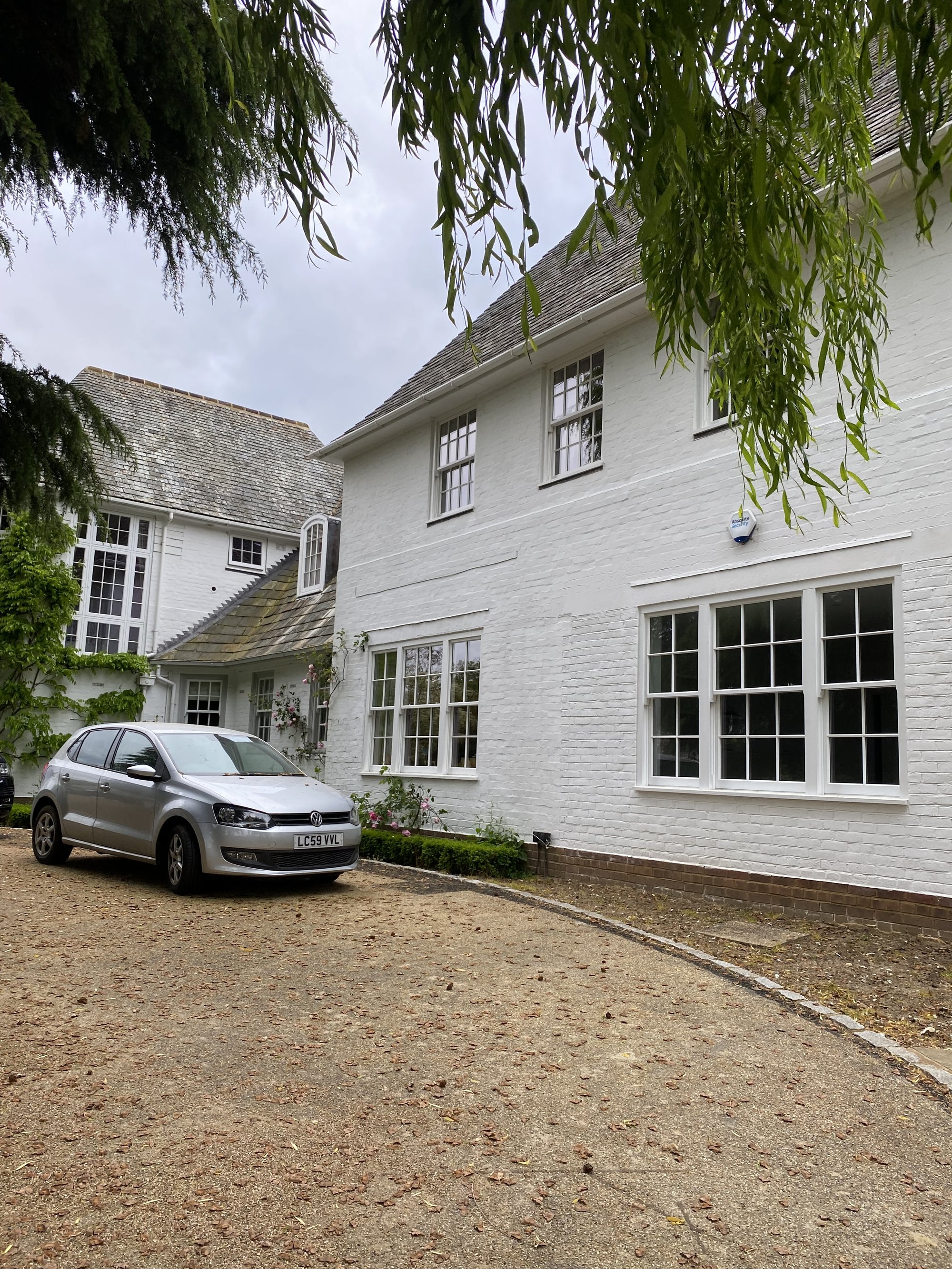
For the majority of properties where render is falling off, full removal and re-rendering isn't actually necessary — and it's usually the most expensive way to solve the problem. Where the substrate underneath is fundamentally sound (which our free survey confirms with a tap test across every elevation), the more cost-effective and genuinely permanent fix is to repair the failed sections properly, then apply a resin-based wall coating across the entire wall.
The coating does two things a patch repair on its own can't: it creates a single, uniform, fully waterproof and breathable barrier across the whole elevation — not just the areas that had visibly failed — and it's roughly 20 times thicker than masonry paint, so it also bridges and seals the fine hairline cracking that's often present elsewhere on the wall but hasn't failed outright yet. That combination is what stops the same failure recurring in a new spot two winters later.
How the Process Works
Free Survey & Tap Test
Full assessment of every elevation to identify the cause and extent of the failure
Repair Failed Areas
Loose and failed render removed, substrate repaired and re-keyed where needed
Prime & Coat
Specialist primer, then the resin coating applied across the whole property
20-Year Guarantee
Issued once you're fully satisfied — covering the whole coated surface
Related Guides
Frequently Asked Questions
Render coming away in large, clean sheets is the classic sign of bond failure — the render never properly gripped the wall underneath, often because of skipped preparation or a bonding agent that wasn't applied. It's different from fine surface cracking, which is more commonly age or natural movement. A tap test across the wall will usually confirm which is happening, since debonded render sounds hollow when tapped even before it visibly cracks.
No — most render systems are designed to last considerably longer than 10 years, typically 15–25 years for traditional sand and cement render and 20–30 years for modern polymer or silicone renders. Failure well inside that expected lifespan usually points to a workmanship or substrate issue — poor preparation, the wrong render system for the wall, or water ingress from another source — rather than simple age.
You can, and for a single area caused by accidental damage, a patch repair from £300–£1,500 is often the right call. However, if the failure is caused by a bond issue or age affecting the whole wall, the same problem is usually present elsewhere too — even where it hasn't visibly failed yet — so patches often need repeating in new spots every few years. A full survey will tell you whether the cause is isolated or wall-wide before you commit to a repair.
In most cases, full removal isn't necessary. Provided the majority of the existing render is soundly bonded — confirmed with a tap test at survey — failed sections can be repaired and the whole wall then sealed under a resin wall coating. This is typically much less disruptive and considerably cheaper than a full re-render. Full removal is only usually needed where bond failure is extensive across most of the wall, or where the render is fundamentally the wrong system for the substrate.
It depends entirely on the extent and cause. A small isolated patch repair typically costs £300–£1,500. Repairing failed areas and coating the whole property with a wall coating typically runs £3,500–£15,000 depending on property size. A full re-render, where the whole render system needs replacing, typically costs £8,500–£26,000+ for larger detached properties. Our free survey gives you a fixed, all-in price for whichever option genuinely suits your wall.
It can, particularly on solid-wall properties without a cavity. Once render has failed and the wall underneath is exposed, water can penetrate directly into the masonry, and over time this can show up as damp patches or mould internally, especially on north-facing or exposed elevations. If you're seeing damp inside on a wall where the render outside has failed, it's worth treating as a priority rather than a purely cosmetic issue.
Yes — Pinnacle covers all of England and Wales for render repair surveys and wall coating jobs. Use our suitability checker or call us free on 0333 772 3623 to confirm coverage for your postcode and arrange a free, no-obligation survey.
Find Out Why Your Render Is Failing — and the Real Cost to Fix It
Our free suitability checker takes less than 60 seconds. Book a free survey — our surveyor will tap-test every elevation, tell you honestly what's causing the failure, and give you a fixed all-in price. Covering all of England and Wales. No obligation to proceed.