


How Much Does Pebbledash Removal Cost?
Pebbledash removal is one of the most common quotes homeowners request when they want to modernise a dated exterior — and one of the most expensive ways to achieve that result. Removing pebbledash is genuinely a specialist, labour-intensive job, and the cost doesn't stop once the pebbledash is off: you're then left with a bare wall that needs a completely new render finish before it's weatherproof again. This guide breaks down real removal costs, what the process actually involves, and whether it's worth it compared with coating directly over pebbledash instead.
Pebbledash Removal Cost by Property Size
| Property Size | Removal Only | Removal + New Render | Coating Directly Over Pebbledash |
|---|---|---|---|
| Single wall | £800–£2,000 | £5,000–£9,000 | £3,500–£5,000 |
| Semi-detached | £2,000–£5,000 | £10,000–£16,000 | £5,000–£8,000 |
| Small detached | £3,000–£7,000 | £15,000–£22,000 | £8,000–£12,000 |
| Medium detached | £4,000–£9,000 | £19,000–£26,000 | £12,000–£15,000 |
Removal alone doesn't leave a finished, weatherproof wall — it's always followed by a new render or coating system, which is why the "removal only" figures above are misleading in isolation. Once you add the render cost that has to follow, removal is consistently the most expensive route to a modernised exterior.
Why So Many UK Homes Have Pebbledash
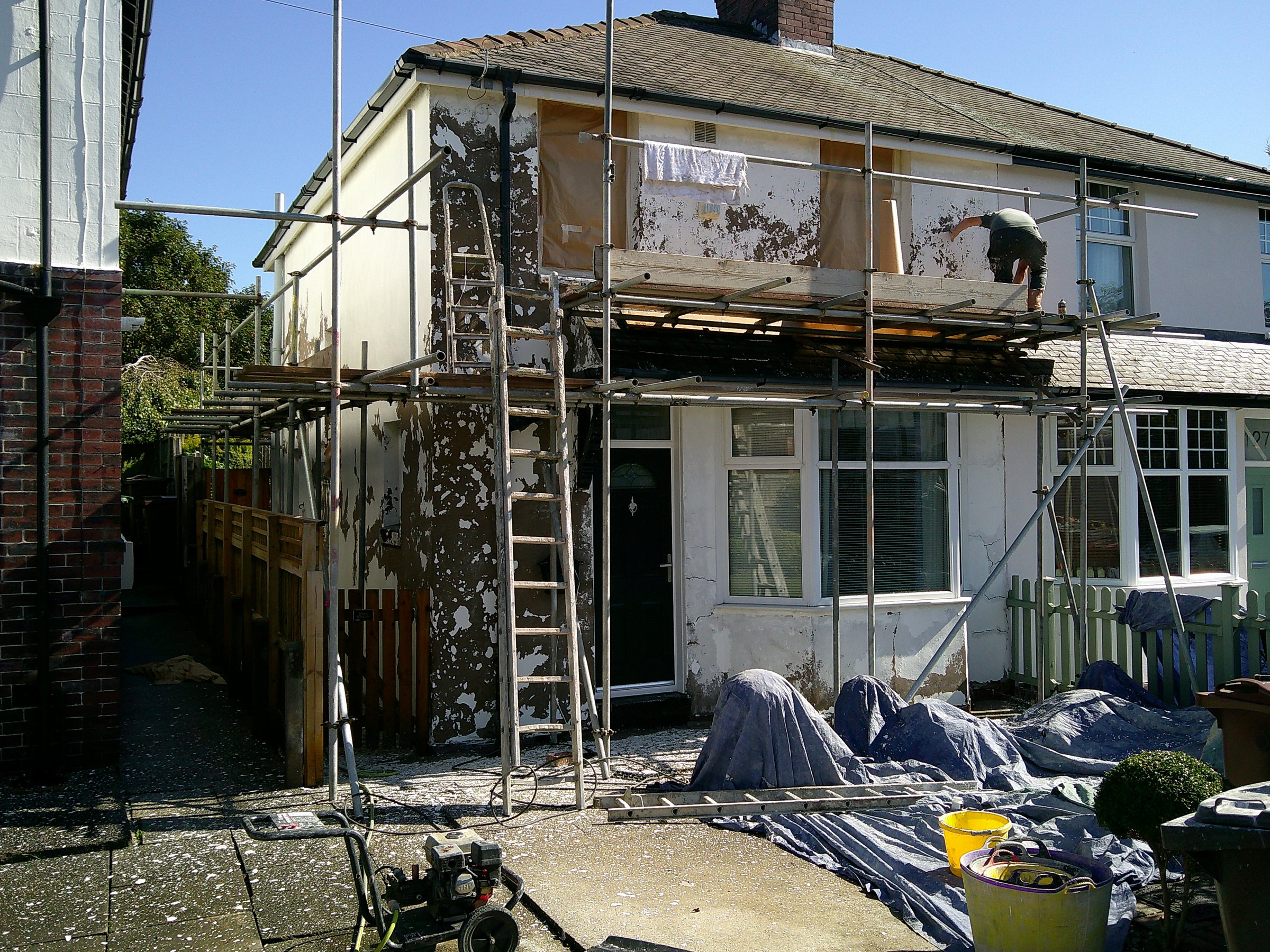
Pebbledash was applied to millions of British homes, predominantly between the 1920s and the 1980s, for reasons that made practical sense at the time. It was relatively cheap and quick to apply compared with a smooth, hand-finished render, it was genuinely effective at weatherproofing solid brick walls that were common in that era, and its rough texture was reasonably good at disguising minor imperfections in the underlying brickwork. Entire estates built during the interwar and post-war housing boom were finished in pebbledash as standard, which is why it's so heavily concentrated in certain property types and eras rather than spread evenly across UK housing stock.
What made sense as a fast, functional finish in 1935 or 1965 is now widely seen as dated, and the texture that once helped disguise imperfect brickwork is the same texture that traps moisture and feeds algae growth today — which is why so many pebbledash homeowners are now looking at their options. See our algae on exterior walls guide for more on why textured surfaces like pebbledash are particularly prone to this.
Why Is Pebbledash Removal So Expensive?
- It's slow, manual labour — pebbledash is mechanically chipped or ground off in sections, and rushing it risks damaging the substrate underneath
- Disposal costs — the removed material is classed as construction waste and needs proper skip hire and disposal
- Substrate repair — pebbledash often conceals cracks, damp or damaged brickwork that only becomes visible once it's off, adding unplanned repair cost
- It's always followed by a full re-render — removal alone leaves an unfinished, unweatherproofed wall, so the render or coating cost that follows has to be added to get a true total
- Older properties may need asbestos testing — pebbledash applied before the 1980s occasionally contains asbestos in the render mix, which requires specialist testing and, if present, licensed removal at a significantly higher cost
The Pebbledash Removal Process, Step by Step
Where removal genuinely is the right choice, it's worth understanding what the process actually involves:
Survey & Testing
Wall assessed; older properties tested for asbestos content if applicable
Mechanical Removal
Pebbledash chipped or ground away in sections back to the substrate
Substrate Repair
Cracks, damp or damaged brickwork exposed underneath repaired
New Finish Applied
Fresh render or coating system applied to the now-bare wall
Each stage needs to be done carefully rather than rushed — removing pebbledash too aggressively can damage the brickwork or blockwork underneath in ways that add unplanned repair cost, which is one of several reasons removal quotes can end up higher than the initial estimate once work is under way.
Asbestos in Pebbledash — What You Actually Need to Know
This is worth its own section given how often it comes up, and how much confusion surrounds it. Some pebbledash render mixes applied roughly between the 1930s and mid-1980s used asbestos fibres as a strengthening additive in the render itself, not in the pebbles. This wasn't universal — plenty of pebbledash from this period contains no asbestos at all — but it's common enough that testing is worth doing before any removal work on a property from this era. The important point for most homeowners is that intact, undisturbed pebbledash containing asbestos poses minimal risk left exactly as it is or coated over, since the fibres are bound within the render and not being released into the air. The risk profile changes specifically when the material is disturbed — chipped, drilled, sanded or removed — which is precisely why removal (rather than coating over) requires proper testing and, if asbestos is confirmed, licensed removal by a specialist contractor rather than standard building work. This is one of the strongest practical arguments for coating over intact pebbledash rather than removing it on older properties: it sidesteps the asbestos question entirely, since nothing about the existing surface is disturbed.
If your property was pebbledashed before around 1985, it's worth having the render tested for asbestos content before any removal work begins. This isn't a reason to panic — intact pebbledash containing asbestos is generally safe left undisturbed — but it changes the removal cost and process considerably if confirmed.
A Worked Cost Comparison
To make the removal-versus-coating decision more concrete, here's how the two routes compare for a typical 1960s semi-detached property with pebbledash across the full exterior:
| Cost Item | Removal + Re-Render Route | Coating Route |
|---|---|---|
| Scaffold | £1,200–£1,800 | Included in fixed price |
| Pebbledash removal | £2,000–£5,000 | Not required |
| Waste disposal | £300–£600 | Not required |
| Substrate repair | £500–£2,000 | Included where needed |
| New render or coating | £6,000–£8,000 | Included in fixed price |
| Typical total | £10,000–£16,000+ | £5,000–£8,000 |
The gap widens further on larger properties, since removal, disposal and substrate repair costs all scale with wall area, while the coating route's efficiency advantage — no removal or disposal stage at all — compounds accordingly.
Signs Your Pebbledash Needs Attention
Not all pebbledash needs urgent action. A few signs suggest it's worth getting a professional assessment sooner rather than later:
- Individual pebbles or whole patches visibly falling away, particularly after storms or heavy rain
- A hollow sound when gently tapped, indicating the pebbledash has debonded from the wall even where it still looks intact
- Persistent green algae staining that returns quickly after cleaning
- Visible cracking running through the pebbledash, especially around windows, doors or at wall junctions
- Damp patches appearing internally on a wall where the exterior pebbledash looks aged or damaged
None of these automatically mean removal is required — as covered below, coating directly over pebbledash resolves most of these issues without needing to strip it back first, provided the substrate underneath is still sound.
Do You Need Planning Permission to Remove Pebbledash?
For most standard houses, removing pebbledash and replacing it with a new render finish falls under permitted development and doesn't require planning permission, provided the new finish is broadly in keeping with the surrounding area in colour and appearance. The exceptions are listed buildings and properties in conservation areas, where external alterations — including changing the exterior finish — often do need consent. If your property falls into either category, check with your local planning authority before committing to removal, since unauthorised work can be costly to put right.
Can You Remove Pebbledash Yourself?
It's physically possible, but rarely advisable. Pebbledash removal is slow, dusty and genuinely hard physical labour, and getting it wrong — chipping too aggressively, or not far enough back to a sound key — can damage the substrate underneath in ways that are expensive to repair properly. There's also the disposal side to consider: removed pebbledash is construction waste and needs a licensed skip, not a few trips to the local tip. Combined with the asbestos consideration on older properties, most homeowners find that any money saved on DIY removal is outweighed by the risk of substrate damage and the disposal hassle — particularly once you factor in that coating over intact pebbledash avoids this entire stage altogether.
Choosing a Pebbledash Removal Contractor
Pebbledash removal is a specialist enough job that not every general builder is well-suited to it. A few things worth checking before booking:
- Experience specifically with pebbledash — removal technique differs from general render stripping, and a contractor experienced with pebbledash specifically is less likely to damage the substrate underneath
- Asbestos awareness — ask directly whether they test for asbestos on pre-1985 properties as standard practice, and whether they're licensed to handle it if found, or will bring in a specialist
- What happens after removal — confirm whether the quote includes the follow-up render or coating, or whether that's a separate job with a separate contractor, since a bare, unfinished wall left exposed to weather can deteriorate quickly
- Waste disposal — removed pebbledash is construction waste requiring proper licensed disposal, not informal removal
- Written scope of work — get clarity on exactly which elevations are being removed, and what happens if unexpected substrate damage is found once the pebbledash is off
Because Pinnacle's approach for the large majority of pebbledash properties is to coat directly over the existing surface rather than remove it, our free survey gives you an independent, no-obligation view on whether removal is even the right call for your specific property before you commission a removal-only contractor.
Which Parts of the UK Have the Most Pebbledash?
Pebbledash is genuinely nationwide, but it's disproportionately concentrated in areas that saw significant housing development during the interwar (1920s–1930s) and post-war (1945–1965) periods — large swathes of suburban London and the Home Counties, industrial towns across the North West, the Midlands, and parts of Wales all have significant pebbledash housing stock from these eras. Coastal and more exposed regions also saw pebbledash used more heavily historically, since its texture and thickness offered genuinely useful weather protection for solid brick walls before cavity wall construction and modern render systems became standard. This regional concentration is part of why pebbledash-specific guidance — rather than generic render advice — is worth seeking out if your property falls into one of these areas and eras.
Mortgage and Insurance Considerations
Pebbledash itself is rarely a barrier to mortgage lending or insurance on its own — it's a widely recognised, common UK exterior finish. Where it can become relevant is if a mortgage valuer or surveyor flags visible defects, such as large areas of loose or missing pebbledash, cracking that suggests movement, or damp evidence linked to failed render. In these cases, a lender may request the issue is addressed as a condition of the mortgage, or a retention may be held back until remedial work is completed. Getting ahead of visible defects — whether through coating or removal — before a property goes on the market can avoid this becoming a hold-up during a sale.
Environmental Impact of Removal vs Coating
Beyond cost, there's a genuine environmental consideration in the removal-versus-coating decision that's easy to overlook. Full removal generates a significant volume of construction waste — the stripped pebbledash itself, plus any damaged brickwork or substrate material replaced during repair — most of which goes to landfill or specialist waste processing. Coating directly over existing, sound pebbledash avoids this waste stream almost entirely, since the original material stays exactly where it is rather than being demolished and disposed of. For homeowners weighing up options partly on environmental grounds, alongside cost and disruption, this is a meaningful point in favour of coating wherever the substrate genuinely supports it.
Neighbours, Terraces and Shared Walls
For terraced and semi-detached properties specifically, pebbledash removal can raise practical considerations beyond your own boundary. Where pebbledash runs continuously across a shared party wall or adjoining elevation, removing it on your side only can sometimes leave a visible, awkward join at the boundary line, and the vibration from mechanical removal work can occasionally be felt by neighbouring properties, particularly on older, less rigid construction. It's worth having a conversation with neighbours before work begins, both as a courtesy and because coordinating timing — even if you're not sharing the cost — can sometimes avoid two separate disruptive jobs happening independently a few years apart. Coating over intact pebbledash sidesteps most of these boundary and vibration considerations, since no demolition-style work is involved.
Is Removing Pebbledash Actually Necessary?
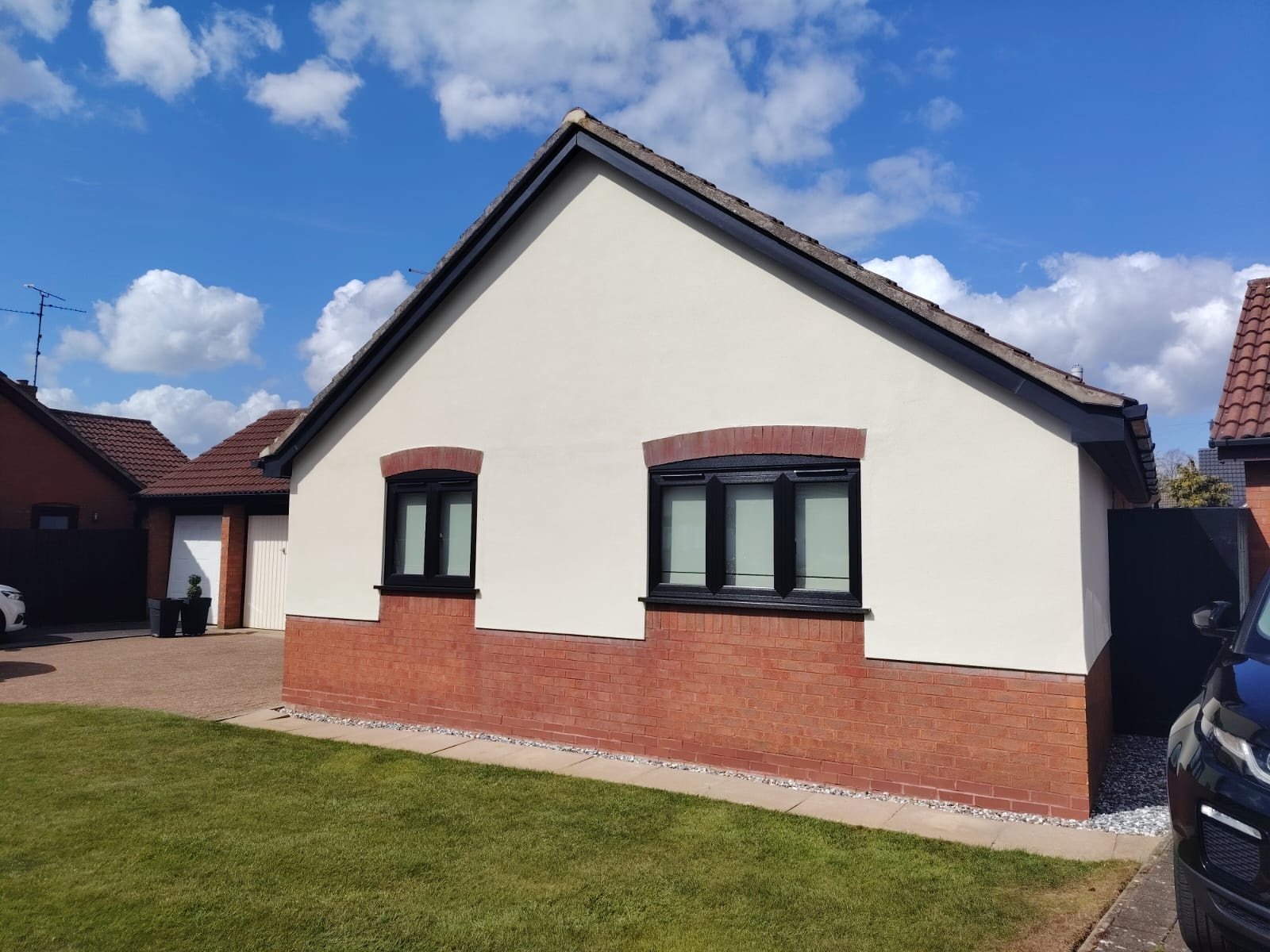
For most properties, no — and this is the single biggest cost-saving decision available to pebbledash homeowners. Provided the pebbledash is firmly bonded to the wall (confirmed with a tap test), it can be coated directly over rather than removed. The coating follows the existing texture, so some surface profile remains, but it's completely sealed, uniform and transformed in appearance — many homeowners find neighbours assume the property has been fully re-rendered.
Removal is really only necessary where the pebbledash itself has failed — extensive delamination, sections falling away, or confirmed asbestos content requiring licensed removal regardless of your finish preference. See our full pebbledash coating guide for the complete comparison of all four options: coat, render over, remove, or paint.
Your Three Options Compared
How the Coating Process Works
Free Survey & Tap Test
Confirms the pebbledash is firmly bonded across every elevation
Prep & Repair
Any loose areas treated, surface cleaned and primed
Coating Applied
Sealed in your chosen colour, following the existing texture
20-Year Guarantee
Issued once you're fully satisfied with the finished result
Related Guides
Frequently Asked Questions
Removal alone typically costs £2,000–£5,000 for a semi-detached property and £4,000–£9,000 for a medium detached house. However, removal always needs to be followed by a new render or coating system, so the true total for removal plus a new finish is significantly higher — typically £10,000–£26,000 depending on property size and the render system chosen.
Coating over intact pebbledash is consistently cheaper — typically around a third of the cost of removal followed by a full re-render, for an equivalent property size. Coating over pebbledash costs £5,000–£15,000 all-in for most homes, versus £15,000–£26,000+ for removal and re-rendering. Removal is only genuinely necessary where the pebbledash itself has failed.
Some pebbledash render mixes applied before the mid-1980s did contain asbestos fibres, though not all did. If your property was pebbledashed in this period and you're considering removal, it's sensible to have a sample tested first. Intact pebbledash containing asbestos is generally considered safe left undisturbed and can still be coated over directly — testing only becomes essential if removal is being considered.
Removing pebbledash exposes the original substrate underneath — usually brick or block — which is rarely in a finished, presentable state and is not weatherproof on its own. It's common to find cracks, damp staining or damaged pointing that was previously hidden under the pebbledash, all of which typically needs repair before a new render or coating can be applied.
Most pebbledash can be coated over directly, provided it's firmly bonded to the wall — confirmed with a tap test across every elevation at survey. Where extensive delamination or loose pebbledash is found across large areas, more substantial remedial work or removal may be needed first. Isolated loose patches are usually treatable as part of the standard preparation process.
Yes — Pinnacle covers all of England and Wales. Use our suitability checker or call us free on 0333 772 3623 to arrange a free, no-obligation survey and tap test, so you get an honest comparison of removal versus coating for your specific property.
Find Out If You Really Need to Remove Your Pebbledash
Our free suitability checker takes less than 60 seconds. Book a free survey — our surveyor will tap-test your pebbledash, give you an honest recommendation, and provide a fixed all-in price. Covering all of England and Wales. No obligation to proceed.