



K Rend vs Wall Coating — The Honest Comparison
K Rend is one of the best-known silicone render brands in the UK, widely specified by builders and contractors on both new-build and renovation projects. If you're comparing K Rend against a wall coating for your property, you're really choosing between two different approaches to the same goal — a durable, weatherproof, good-looking exterior — and the right answer depends more on your existing wall's condition than on which product is objectively "better". This guide gives you the honest comparison: cost, durability, disruption, and which approach suits which situation.
K Rend Colour Options
K Rend is through-coloured, meaning the colour runs through the full thickness of the material rather than sitting as a surface finish — one of its genuine strengths, since minor surface scuffs are less visually obvious than on a painted wall. The standard K Rend colour range runs to several dozen options across their Silicone TC15, TC20 and K1 finishes, covering common neutrals, greys, creams and a handful of stronger colours. Bespoke colour matching is available but typically carries a lead time and cost premium, since it's mixed to order rather than drawn from standard stock. One practical point worth knowing: because the colour is baked into the material, changing your mind about the colour later effectively means either painting over K Rend (which then needs the same repainting cycle as any masonry paint) or coating over it — you can't simply "repaint" it back to a fresh finish the way you might touch up a painted wall.
Is K Rend Suitable for Every Wall Type?
K Rend and similar silicone render systems generally perform well across most standard UK wall constructions — solid brick, cavity block and modern timber-frame with appropriate backing board. Where it becomes more complicated is on older, solid-wall properties that were traditionally finished in lime render rather than modern cement-based systems. Applying a silicone render system like K Rend directly over or in place of lime render on a genuinely old solid-wall property can trap moisture in a way lime render doesn't, since lime is significantly more breathable. This is a specialist area where the wrong system choice can cause long-term damage rather than solve a problem, so it's worth a proper assessment before committing to any full render system on a period property — see our rendering cost by property type guide for more on how wall construction affects render choice generally.
Choosing a K Rend Approved Contractor
K Rend, like most premium render manufacturers, operates an approved installer scheme, and it's worth checking this before booking:
- Formal K Rend approval — ask directly whether the contractor is an approved K Rend installer, not just experienced with render generally. Many manufacturer guarantees are void without it
- Which specific K Rend guarantee applies — K Rend's own guarantees vary by product line and are separate from any workmanship guarantee the contractor offers
- References from K Rend jobs specifically — ideally more than a year or two old, so you can see how the specific system has weathered rather than how it looked on completion
- Written scope confirming exact product line — "K Rend" covers several distinct product ranges (silicone, acrylic, monocouche-style) with different performance characteristics and costs, so make sure the quote specifies exactly which one
What Is K Rend?
K Rend is a silicone-based, through-coloured render system manufactured by Kilwaughter Minerals, widely regarded as one of the premium options in the UK render market. Like other silicone renders, it's self-cleaning to a degree — rain tends to wash surface dirt away rather than letting it build up — and it's formulated to be highly water-repellent while still allowing the wall to breathe. It's applied as a full render system (typically over a base coat and mesh) rather than as a thin coating, which is the key structural difference from a wall coating approach.
Where K Rend Fits in the UK Render Market
Kilwaughter Minerals, the manufacturer behind K Rend, has been producing render systems for decades and the brand has become something of a shorthand in the UK construction industry for premium silicone render generally — in the same way some people say "hoover" for any vacuum cleaner. This brand recognition is part of why it's so frequently specified by architects, developers and homeowners without necessarily comparing it against alternatives first. That recognition is genuinely earned — K Rend's silicone systems perform well and the company has a solid track record — but it also means the render market has something of a default bias toward K Rend and similarly-positioned premium brands, rather than a genuinely open comparison against every available option including a wall coating. Being aware of that bias is useful context when you're the one paying for the work rather than simply following whatever a contractor or architect's spec sheet defaults to.
K Rend Cost vs Wall Coating Cost
| Property Size | Full K Rend Application | Wall Coating Over Sound Render |
|---|---|---|
| Single wall / small area | £5,500–£8,500 | £3,500–£5,000 |
| Semi-detached | £8,000–£13,500 | £5,000–£8,000 |
| Medium detached | £18,500–£25,000 | £12,000–£15,000 |
| Large detached | £23,000–£37,000+ | £15,000–£22,000 |
K Rend's cost sits at the premium end of the render market, reflecting both material cost and the full system application (base coat, mesh, top coat) it requires. A wall coating applied over existing sound render or masonry avoids that full system build-up entirely.
How Disruptive Is Each Route, Day by Day?
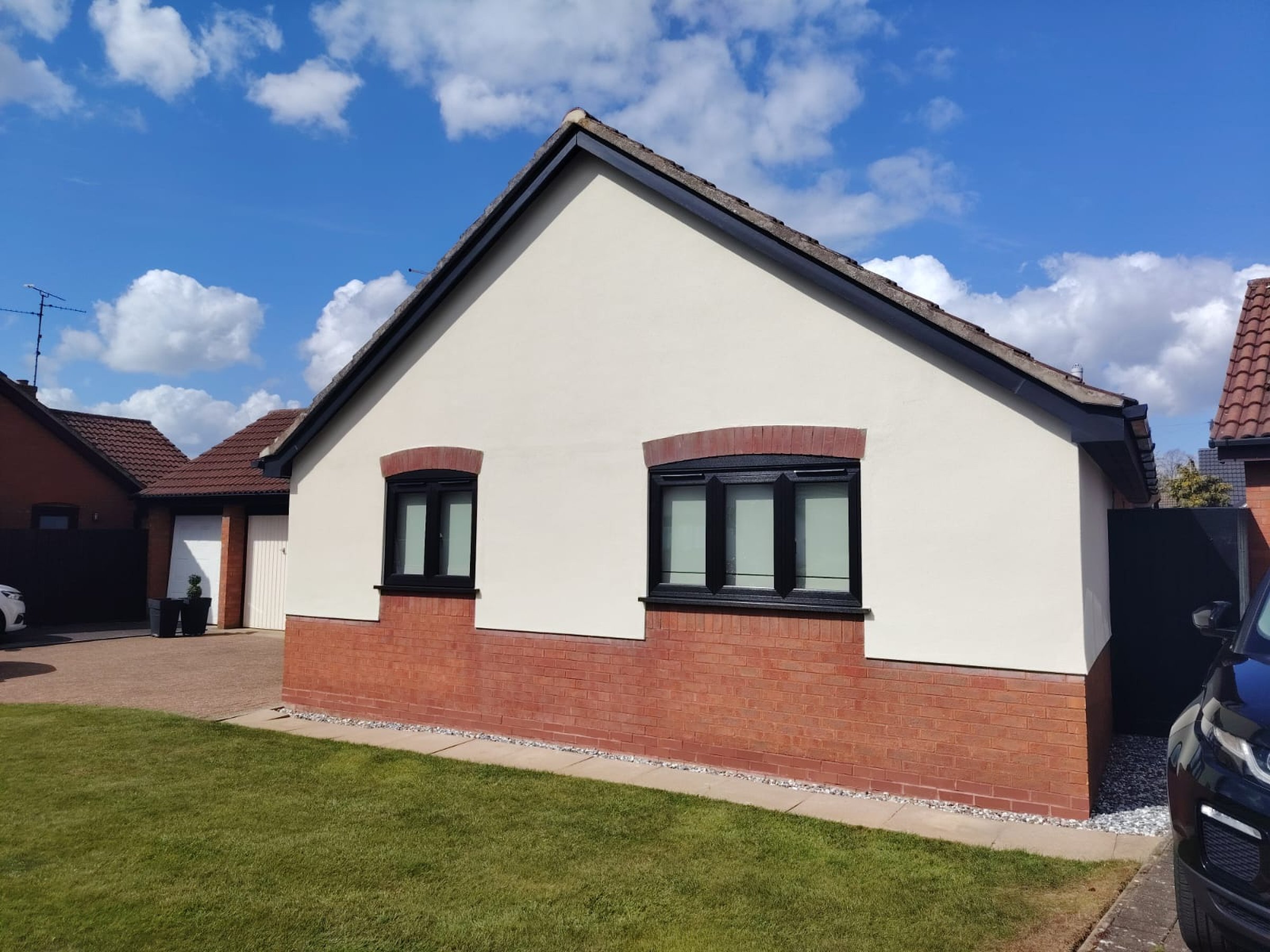
Cost is only part of the decision — disruption is what most homeowners underestimate going in. A full K Rend application typically means scaffold up for 1–2 weeks: several days removing any existing render and preparing the substrate, a base coat and mesh layer with drying time built in, then the K Rend top coat itself, plus final cure time before scaffold comes down. A wall coating applied over sound existing render follows a much shorter sequence — survey and prep, primer, then the coating itself, typically wrapped up in 3–5 days since there's no multi-layer system to build up from scratch. For a household living through the work, that difference is often as significant as the cost gap.
A Simple Way to Decide
Rather than starting with "which render brand should I choose", it's worth starting with a more useful question: is my existing wall actually failing, or does it just need protecting and refreshing? The answer changes everything about which route makes sense.
- If your existing render or masonry is structurally failing — extensive bond failure, large areas missing, or fundamentally the wrong system for your wall — a full render system like K Rend or monocouche is the right call, and premium systems like K Rend are worth the extra cost for the durability
- If your existing render is sound but tired, cracked in places, algae-affected or just dated-looking — a wall coating achieves a comparable transformation and self-cleaning-style finish for a fraction of the cost, without the disruption of full removal
- If you're not sure which category applies — this is exactly what a free survey and tap test is for. It's a five-minute assessment that tells you honestly rather than defaulting to whichever option a contractor is set up to sell
A Real Worked Example
Before that example, it's worth a note on where K Rend and monocouche sit within the wider render market. Both are genuinely well-regarded systems used across thousands of UK properties every year, and neither is a poor choice — the comparison here isn't about product quality, it's about matching the right approach to your specific wall's actual condition. A property with genuinely failed, unsalvageable render needs a full system regardless of brand; a property with sound but tired render is where the cost and disruption gap against a coating becomes the deciding factor.
For a typical 3-bed semi-detached property with existing render that's cracked in a few places but fundamentally sound:
| Route | Cost | Duration | Guarantee |
|---|---|---|---|
| Full K Rend system | £8,000–£13,500 | 1–2 weeks | Manufacturer, typically 10–15yr |
| Full monocouche system | £7,000–£13,000 | 1–2 weeks | Manufacturer, typically 10–15yr |
| Wall coating over existing render | £5,000–£8,000 | 3–5 days | 20yr no-quibble |
For this specific scenario — sound render that just needs sealing and refreshing rather than replacing — the coating route delivers a comparable transformation for meaningfully less money, less time on scaffold, and a longer guarantee. Where the render genuinely needs full replacement, that math shifts and a full system becomes the right call.
K Rend vs Wall Coating — Side by Side
| K Rend (Full System) | Wall Coating | |
|---|---|---|
| Requires removing existing render? | Usually, yes | No, in most cases |
| Typical duration | 1–3 weeks | 3–7 days |
| Lifespan | 25–30 years | 20-year guaranteed |
| Self-cleaning finish | Yes | Yes |
| Bridges existing hairline cracks | N/A — new system | Yes |
| Typical cost (semi-detached) | £8,000–£13,500 | £5,000–£8,000 |
What About Monocouche Render?
Monocouche ("one-coat") render is the other system you'll commonly see quoted alongside K Rend, usually as the cheaper alternative. It's a reasonable mid-range render system, but the same logic applies as with K Rend: it's still a full render system requiring removal of any existing render and a complete new build-up, so it carries the same fundamental cost and disruption disadvantage against a wall coating.
| Monocouche (Full System) | K Rend (Full System) | Wall Coating | |
|---|---|---|---|
| Cost per m² | £55–£75 | £70–£100 | Fixed price, no removal |
| Semi-detached typical cost | £7,000–£13,000 | £8,000–£13,500 | £5,000–£8,000 |
| Requires removing existing render? | Usually, yes | Usually, yes | No, in most cases |
| Lifespan | 15–20 years | 25–30 years | 20-year guaranteed |
Whichever full render system you're comparing — monocouche, K Rend, silicone, or traditional sand and cement — the same question is worth asking first: does your existing wall actually need full replacement, or would sealing and waterproofing what's already there achieve the same result for less? A free survey with a tap test answers that honestly before you commit to either.
Getting Genuinely Comparable Quotes
One of the most common frustrations homeowners report is receiving quotes that aren't actually comparable — one contractor quoting K Rend, another quoting a generic "silicone render," a third quoting a coating, all with different inclusions and exclusions buried in the small print. To compare properly, make sure every quote specifies: the exact product or system by name, whether scaffold is included or separate, whether any necessary substrate repair is included or will be charged as an extra once work starts, and exactly what guarantee is offered and by whom. A quote that's significantly cheaper than others is worth double-checking against this list, since it's common for one or more of these to simply be missing rather than genuinely included at a lower price.
When Full K Rend Makes More Sense
K Rend and other premium silicone render systems are genuinely the right choice in specific situations:
- New-build or extension work where there's no existing render to work around — you're starting from bare substrate regardless
- Where the existing wall has extensive bond failure or structural render problems that a coating alone can't resolve — see our render falling off guide for how to tell the difference
- Where building regulations or a specific architectural specification calls for a particular render system by name
Outside of these situations, homeowners are often quoted a full render system by default — because it's what most rendering contractors are set up to sell — when their existing wall would actually support a lower-cost, less disruptive coating instead.
When a Wall Coating Makes More Sense
A wall coating is generally the better fit where:
- The existing render or masonry is fundamentally sound, even if cracked, dated-looking or algae-affected
- Cost and disruption are genuine considerations — coating typically runs at a fraction of a full render system's cost
- You want the durability and self-cleaning benefits associated with silicone-based systems without the expense of full removal and rebuild
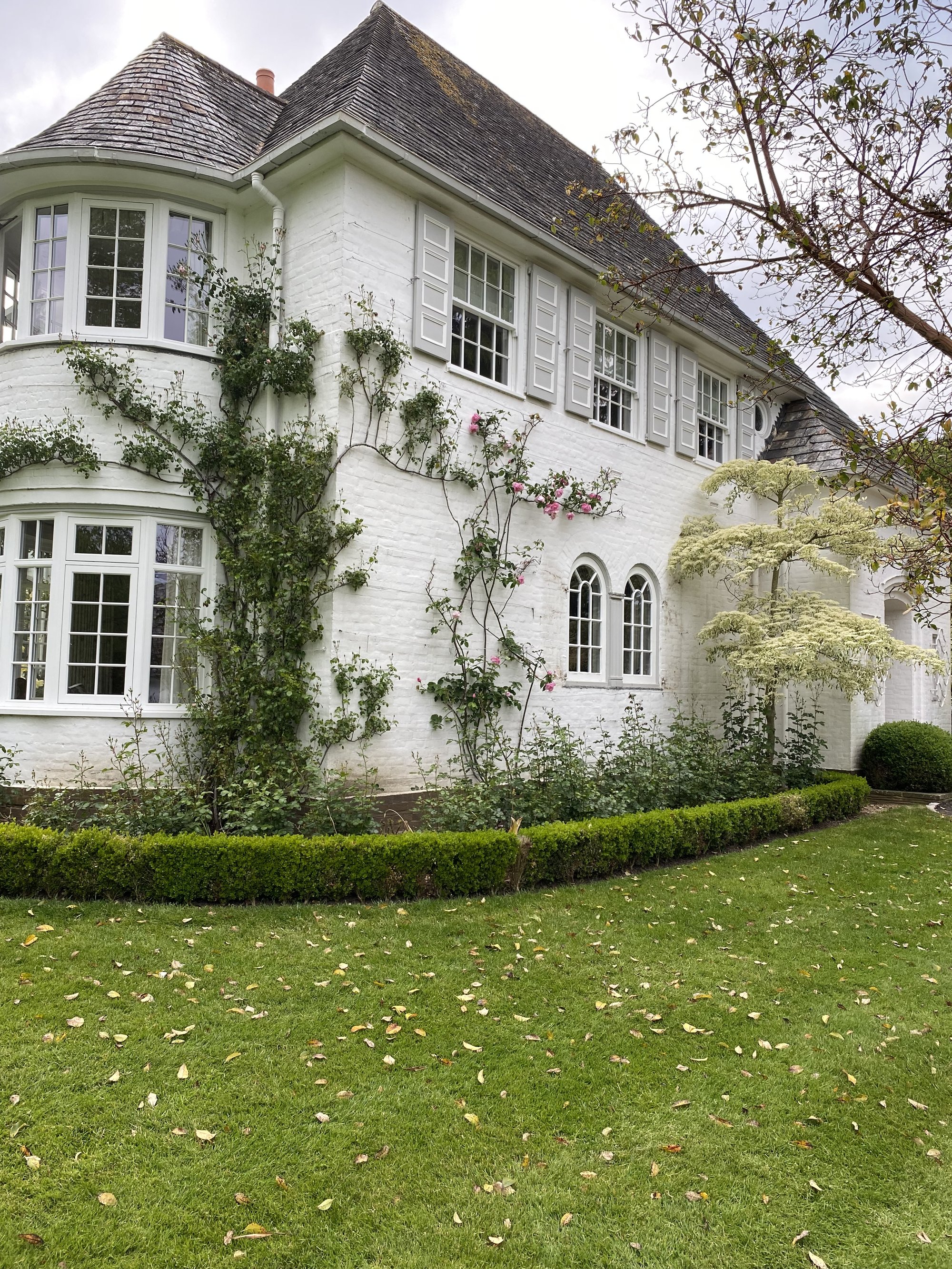
Our free survey includes a full tap test specifically to determine which category your property falls into, rather than defaulting to the more expensive option.
How the Coating Process Works
Free Survey & Tap Test
Confirms whether your existing render can be coated over
Repair & Prep
Failed areas repaired, surface cleaned and primed
Coating Applied
Sealed in your chosen colour across the full elevation
20-Year Guarantee
Issued once you're fully satisfied with the finish
Related Guides
Frequently Asked Questions
Neither is universally "better" — they suit different situations. K Rend is a genuinely excellent full render system, best suited to new-build work or walls needing complete render replacement. A wall coating achieves comparable weatherproofing and a self-cleaning-style finish at a fraction of the cost, provided your existing render or masonry is fundamentally sound. A free survey with a tap test will tell you which situation applies to your property.
K Rend typically costs £70–£100 per m² including material and labour as part of a full render system application, putting it at the premium end of the render market — usually 55–70% more than an equivalent wall coating. For a 3-bed semi-detached house this usually works out at £8,000–£13,500 all-in including scaffold and any necessary substrate preparation, versus £5,000–£8,000 for a wall coating.
Generally no — K Rend and similar full render systems are designed to be applied to a prepared substrate, typically meaning existing render needs to be removed first. This is one of the key differences versus a wall coating, which is specifically designed to be applied directly over sound existing render without removal.
A wall coating is typically significantly cheaper — often around a third of the cost of a full K Rend application for an equivalent property — because it doesn't require removing existing render or building up a full new render system. The exception is where your existing render genuinely needs full replacement, in which case comparing K Rend against other premium render systems is the more relevant comparison.
K Rend is generally more crack-resistant than traditional sand and cement render due to its flexible silicone formulation, but no render system is entirely immune to cracking if applied poorly or over an unsuitable substrate. Most K Rend cracking issues trace back to application or substrate problems rather than the material itself — see our render falling off guide for the common causes across all render types.
A wall coating comes in its own extensive colour range, separate from K Rend's own palette, so you're not limited to trying to replicate a specific K Rend shade. Most popular render colours — greys, off-whites, creams and muted tones — have close equivalents available as a coating finish, and your surveyor can talk through options and provide samples at your free survey.
A full K Rend application typically takes 1–2 weeks once scaffold is up, since it involves removing any existing render, a base coat and mesh layer, then the K Rend top coat, each stage needing drying time. A wall coating applied over sound existing render is usually completed in 3–5 days, since there's no multi-layer system to build from scratch.
Yes — Pinnacle covers all of England and Wales. Use our suitability checker or request a free survey to arrange a free, no-obligation survey and get an honest comparison for your specific property.
Get an Honest Comparison for Your Property
Our free suitability checker takes less than 60 seconds. Book a free survey — our surveyor will assess whether your existing render can be coated, and give you a fixed all-in price. Covering all of England and Wales. No obligation to proceed.