



Storm Damage & Emergency Render Repair — What to Do
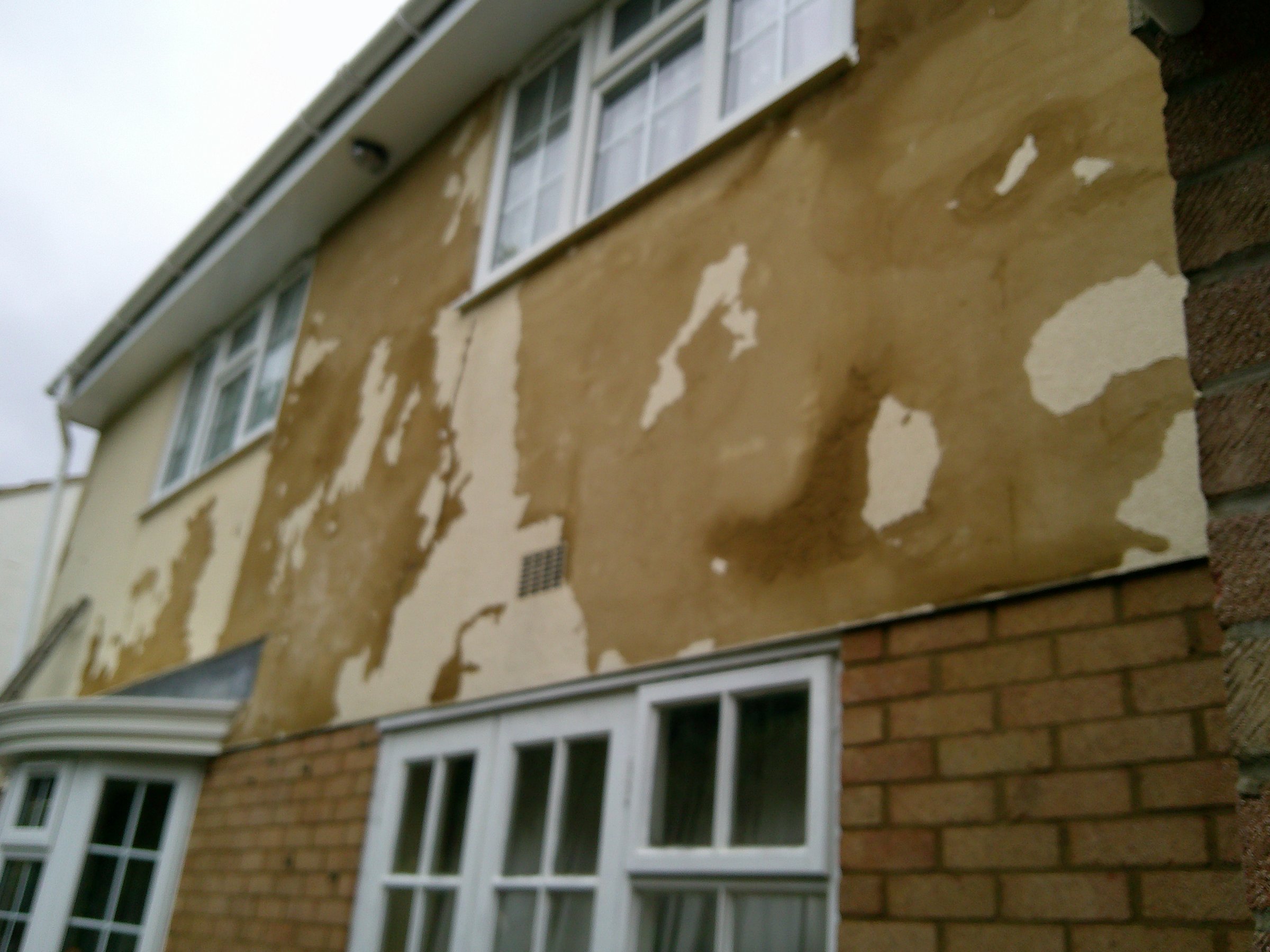
A storm ripping render away, or a large section suddenly coming loose after weeks of heavy rain, is one of the more stressful home maintenance situations to deal with — it's visible, it's exposing your wall to the weather right now, and it usually happens at the worst possible time. This guide covers what to do in the first 24–48 hours, when a full repair genuinely needs to happen quickly, and — importantly — why a permanent fix usually costs less and takes less time than most people expect once you know the right route.
What to Do in the First 24–48 Hours
- Photograph the damage — from a safe distance, before anything is disturbed. This matters for insurance claims and for getting an accurate remote assessment or quote
- Check for immediate safety hazards — loose render sections that could fall, especially near doors, paths or where people walk. Cordon off the area if needed rather than trying to remove loose material yourself at height
- Cover exposed masonry temporarily if you can do so safely — a tarpaulin or heavy-duty sheeting weighted down can reduce further water ingress while you arrange a proper assessment, though this isn't always practical or safe depending on the location
- Contact your insurer if the damage follows a specific storm event — sudden storm damage is often covered under standard buildings insurance, unlike gradual wear and tear. See the insurance section below
- Book a survey as soon as possible — the longer exposed masonry is left, the more water damage accumulates underneath, which can turn a render repair into a more expensive substrate repair
Does UK Storm Risk Vary by Region?
Yes, meaningfully. The Met Office and insurance industry data consistently show the western and northern parts of the UK — Wales, the North West, Scotland-adjacent counties, and coastal areas generally — experience more frequent and more severe storm events than the drier, more sheltered South East. Properties in these higher-risk regions see storm-related render damage more often, and it's worth factoring this into how proactively you address early warning signs like hairline cracking, since the next significant weather event may be closer than in a lower-risk area. This regional pattern is also reflected in how some insurers price buildings cover, so if you're in a higher-risk area, it's worth checking your policy specifically covers storm damage to exterior finishes rather than assuming it's automatically included at the same level everywhere.
Who to Call First — Contractor vs Insurer
It's worth getting these in the right order. Contact your insurer first if the damage clearly follows a specific storm event and you intend to claim — they may want to send their own assessor before repair work begins, and starting repairs first can sometimes complicate a claim. If you're not claiming on insurance, or the damage is more general wear that's simply become critical, go straight to booking a survey rather than waiting. Either way, getting a written, dated assessment from a contractor promptly is useful for both routes — it gives you a professional record of the damage and extent, which insurers often ask for regardless of whether their own assessor also attends.
The Real Cost of Waiting
It's tempting to get several quotes and take time deciding when the damage doesn't look immediately dangerous, but exposed masonry deteriorates faster than most people expect. Each week of exposure to UK weather — particularly ongoing rain — increases the volume of water getting into the wall, which can turn what would have been a straightforward render repair into a substrate repair as well, adding cost and time to the eventual job. This doesn't mean rushing into the first quote without comparing options, but it does mean getting the assessment and a written quote promptly, even if you take a few days to decide between contractors once you have real numbers in front of you.
How Urgent Is It, Really?
Not every case of render damage needs same-week action, but a few signs suggest it genuinely does:
- Large sections of render have come away completely, exposing bare brick or block directly to weather
- The damage is on a north-facing or heavily exposed elevation where moisture won't dry out between rain
- You're seeing damp appearing internally on the same wall, suggesting water is already getting through
- Loose sections remain that could fall and cause injury or damage
- More rain or a further storm is forecast before you can get it assessed
Where none of these apply — for example, a smaller area of render has come away on a sheltered, south-facing wall — it's still worth getting assessed promptly, but the urgency is lower and you have more room to get multiple quotes rather than rushing into the first available contractor.
Why DIY Temporary Fixes Can Sometimes Make Things Worse
It's a natural instinct to want to do something immediately, and some temporary measures genuinely help — a properly weighted tarpaulin covering exposed masonry, for instance. But a few common DIY responses can inadvertently cause more harm than good. Sealing exposed masonry with the wrong type of product — some DIY sealants and fillers aren't breathable and can trap moisture that's already got in, making the eventual repair more complicated once a professional assessment happens. Climbing to inspect or attempt repairs at height without proper equipment is also a genuine safety risk that isn't worth taking, since loose render sections can be more unstable than they appear from the ground. If in doubt, a safe temporary covering at ground-accessible height and a prompt professional assessment is the more reliable combination than attempting anything more involved yourself.
Does Home Insurance Cover Storm Damage to Render?
Often, yes — this is one of the clearer cases where buildings insurance typically applies, since storm damage is a sudden, specific, insurable event rather than gradual wear and tear. Most standard buildings policies cover storm damage as standard, though it's worth checking your specific policy wording and any excess that applies. Insurers will generally want to see photographic evidence of the damage and may send their own assessor before agreeing a claim, which is another reason to document the damage promptly rather than waiting. If the render was already failing or in poor condition before the storm — for example, if it had existing bond failure that the storm simply finished off — insurers can sometimes dispute the claim on the basis that the damage reflects pre-existing wear rather than the storm event itself, so an honest, prompt assessment matters for the claim as well as the repair.
Get photographic evidence and a written assessment as soon as possible after storm damage — both for your insurance claim and to stop a smaller repair turning into a larger one while you wait.
What a Professional Emergency Assessment Actually Involves
Knowing what to expect from a proper assessment helps you judge whether a contractor is being thorough or just quoting from a photo. A genuine emergency survey should cover more than just the visibly damaged area:
- The full elevation, not just the damaged patch — storm damage often reveals a wider problem that wasn't visible before, since it usually finds the weakest point in an already-compromised wall
- A tap test across the surrounding render — checking for hollow-sounding, debonded areas near the visible damage that haven't failed yet but are at risk
- Checking the source of water ingress — a blocked or damaged gutter, a failed seal around a window, or a cracked pipe are common contributing factors worth identifying so they're fixed alongside the render itself
- A written, itemised assessment — not just a verbal estimate, since this is what you'll need for insurance purposes and for comparing against other quotes
A rushed assessment that only looks at the obviously damaged section risks missing a related issue that causes a repeat failure within a year or two.
Can Repair Work Happen in Ongoing Bad Weather?
This is a fair practical question — if the weather that caused the damage is still unsettled, can work actually start? Scaffold erection and most preparation work can generally proceed in a wide range of conditions, though high winds specifically can delay scaffold erection for safety reasons. The coating application stage itself needs reasonably settled, dry conditions to cure properly, which is a genuine constraint during an active storm system but rarely causes more than a short delay once the immediate weather has passed. A reputable contractor will be upfront about weather-dependent scheduling rather than promising a fixed date regardless of conditions, since rushing application in unsuitable weather risks compromising the very repair you're trying to get done properly.
Your Options for Emergency Render Repair
A full render replacement is sometimes recommended by default, but typically costs 40–60% more and takes considerably longer than repairing the damage and coating the wall — see our re-rendering a house guide for the full cost comparison.
What Insurers Actually Look For in a Claim
Beyond the basics of photographing damage promptly, a few specifics can make the difference between a smooth claim and a disputed one. Insurers generally want to see that the damage is consistent with a specific, dateable weather event — matching your local weather records for the period is straightforward for anyone to check and strengthens a claim significantly. They'll also look at the general condition of the surrounding render: damage that's clearly an isolated storm event on otherwise sound render is more straightforward than damage on a wall that already showed signs of wear, since insurers can argue the latter reflects pre-existing deterioration rather than the storm itself. If you have any previous photos of the property — from estate agent listings, previous maintenance records, or even old family photos — showing the wall's condition before the storm, these can support your claim. Finally, get at least one, ideally two, independent written quotes for the repair rather than relying solely on the insurer's own assessor's figure, since you're entitled to have the work done by a contractor of your choice in most cases.
Why Storms Cause This Kind of Damage
Storm damage to render is rarely truly random — it almost always finds the weakest point in an already-compromised system. Wind-driven rain forced horizontally into a wall exploits existing hairline cracks or areas of bond failure that weren't visibly a problem in calmer weather. High winds can also physically pull at loose or poorly bonded render sections directly. This is why storm damage often appears to "come from nowhere" on a wall that looked fine the week before — the underlying weakness was already there, and the storm was simply the event that made it visible. See our render falling off guide for the full breakdown of what causes render to fail in the first place.
How the Repair Process Works
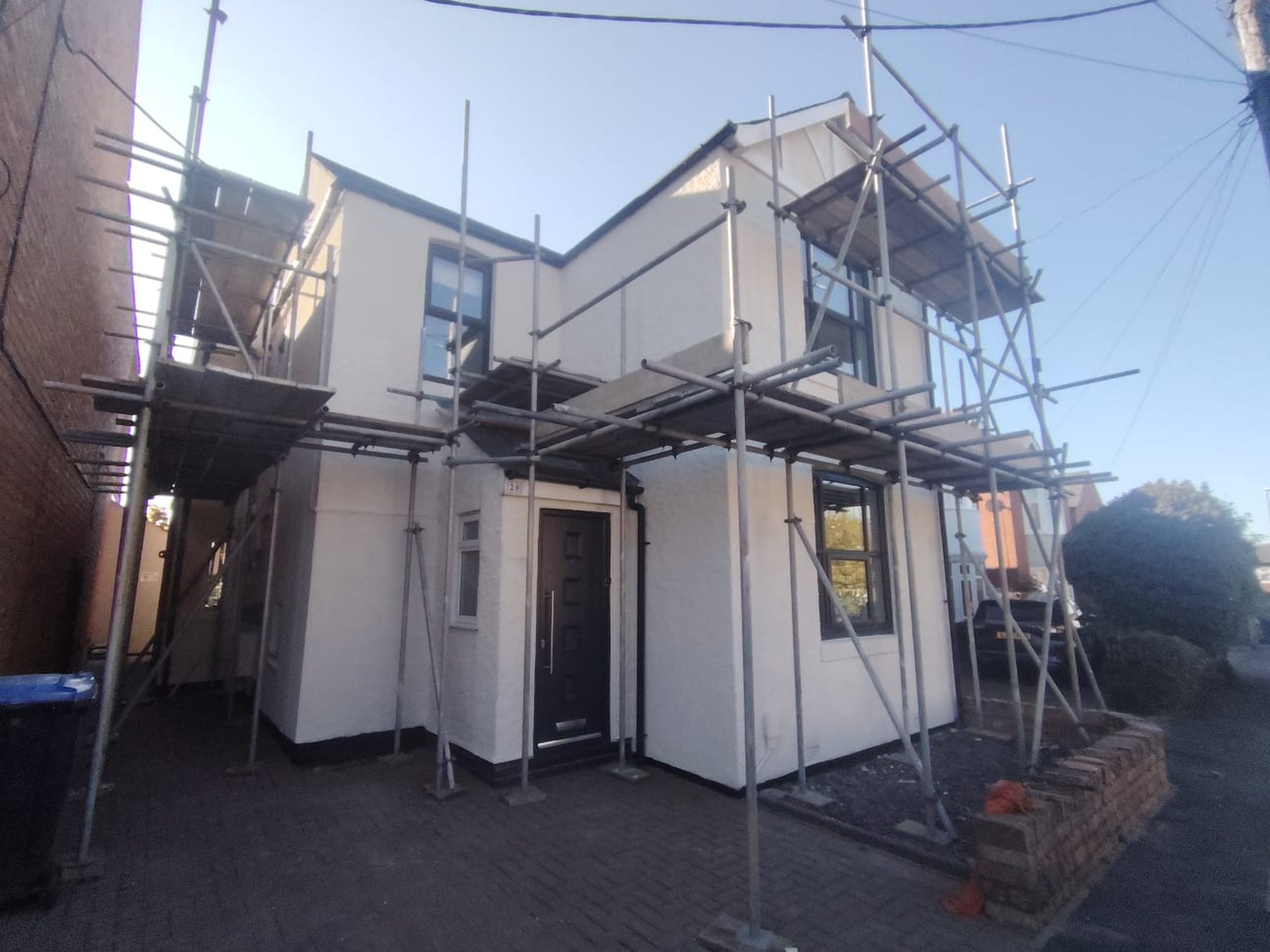
Urgent Survey
Priority assessment of the damage and the wider wall condition
Fixed Price, Fast
All-in quote confirmed quickly so work can be scheduled without delay
Repair & Coat
Damage repaired, then the full elevation sealed against future failure
20-Year Guarantee
Covering the repaired and coated surface
Reducing the Risk of Future Storm Damage
Once the immediate repair is sorted, a few things reduce the chance of the same thing happening again:
- Address any hairline cracking or early bond issues promptly rather than waiting, since these are exactly what storms exploit
- Keep gutters clear so water isn't running down the wall face during heavy rain
- Consider a wall coating across the full elevation rather than a like-for-like patch repair, since a sealed, waterproof, flexible coating is significantly more resistant to wind-driven rain finding a way in than aged, cracked render
Which Elevations Are Most at Risk?
Not every wall faces the same storm risk. In the UK, weather systems predominantly move in from the south-west, which means south and west-facing elevations typically bear the brunt of wind-driven rain and are statistically more likely to show storm damage first. Corner properties, end-of-terrace positions and anything on elevated or exposed ground — a hilltop, an open field boundary, near the coast — face amplified wind loading compared with a sheltered mid-terrace position. If you've had storm damage once on a particular elevation, it's worth treating that wall as higher-risk going forward and prioritising it if you're planning any wider exterior work, since the same conditions that caused the first failure are still there waiting for the next storm.
Related Guides
Frequently Asked Questions
Most urgent survey requests can be assessed within a few days, with repair and coating work typically completed 3–5 days once scaffold is up, depending on the extent of the damage and weather conditions. Genuinely urgent cases — significant exposure of the substrate, or ongoing water ingress — are prioritised accordingly.
Usually, yes — sudden storm damage is a specific insurable event typically covered under standard buildings insurance, unlike gradual wear and tear. Photograph the damage promptly and check your policy wording, since insurers may query claims where the render shows signs of pre-existing deterioration rather than storm-specific damage.
Photograph the damage for insurance and assessment purposes, check for any immediate safety hazards like loose overhead sections, cover exposed masonry temporarily if it's safe to do so, and book a survey as soon as possible. The longer bare masonry is exposed to weather, the more the repair scope tends to grow.
For most storm damage, repairing the affected section and then coating the full elevation is the more cost-effective and genuinely permanent route — typically 40–60% cheaper than a full re-render, and it also seals any other weak points on the wall that could fail in a future storm. A full re-render is only usually necessary where the underlying render is extensively failing beyond the storm-damaged area.
A patch repair of storm-damaged render typically costs £300–£1,500 depending on the area affected. Repairing the damage and coating the full elevation to prevent recurrence typically costs £3,500–£15,000 depending on property size, backed by a 20-year guarantee rather than a repeat repair bill after the next storm.
Yes — Pinnacle covers all of England and Wales and can prioritise genuinely urgent assessments. Use our suitability checker or request a free survey, and let us know the damage is urgent so we can respond accordingly.
Get Your Render Repair Sorted Fast
Our free suitability checker takes less than 60 seconds. Book a free survey — our surveyor will assess the damage and give you a fixed all-in price. Covering all of England and Wales. No obligation to proceed.